Is it a mole or a wart? Learn how to identify them
In most cases, the differences between mole and wart are easy to spot and can help determine the most appropriate treatment.
Our skin is covered with spots, bumps and skin lesions. Many of them look similar, so they often go unnoticed. Fortunately, most are benign and pose no risk to health.
Moles and warts are two of the most common imperfections we have on our bodies. It is easy and common to confuse them, as in some cases they have a similar shape or colour. However, there are distinctions worth knowing, as understanding the differences between mole and wart facilitates the early detection of skin abnormalities.
How can you tell the differences between mole and wart?
The first thing to look out for is their appearance. Warts are small bumps that rise above the skin and have a rough or coarse texture. They have an irregular appearance, similar to that of a cauliflower, and their colour can range from a skin-like shade to a greyish or light brown hue.
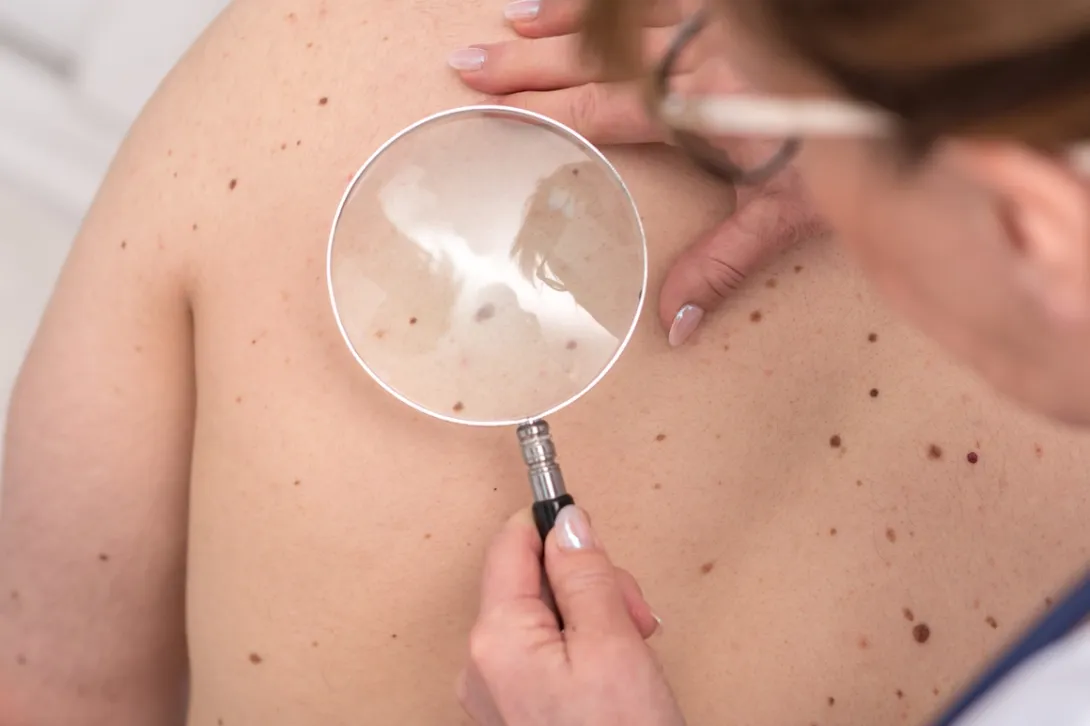
Moles, on the other hand, also known as melanocytic nevi, are small round or oval spots with well-defined edges. Their surface is usually smooth, and they appear as pigmented spots. Most are present on our bodies from birth, although they can also develop later in life, particularly as a result of sun exposure.
Understanding each skin condition
Moles are clusters of melanocytes, the cells responsible for producing melanin. Rather than being evenly distributed across the skin, these cells are concentrated in a single spot, forming a small, visible cluster. In most cases, nevi are benign, although some may develop into melanoma, one of the most aggressive forms of skin cancer.
In the case of warts, their origin is viral. They are caused by the human papillomavirus (HPV), which causes cells to multiply rapidly and form small lumps on the surface of the skin. They can appear on various parts of the body, such as the hands, face, feet, armpits or genitals. Removing them is not always straightforward, as they are deep-seated and have their own network of blood vessels.
When should you see a dermatologist?
Although the differences between mole and wart are clear, it can sometimes be difficult to determine the nature of a skin lesion with certainty. If you have any doubts, it is advisable to consult a dermatologist so that they can examine it.
Furthermore, there are some specific cases in which it is necessary to see a specialist:
If you notice a skin abnormality, under no circumstances should you touch it or try to remove it yourself, as this could lead to infection, bleeding or cause pain and further complications.
Treatments for warts and moles
The removal of any skin lesion should always be carried out under the diagnosis and supervision of a doctor. For warts, there are various over-the-counter treatments that can help to remove them. If they persist, a dermatologist may resort to other procedures, such as laser surgery, surgical excision or cryotherapy, amongst others.
In the case of moles, their removal is not always necessary, as most are benign, although there is a possibility that some may develop into melanoma. Fortunately, if detected early, they can be treated successfully. In such cases, a dermatologist may remove them using procedures such as laser therapy or surgery.