The market of pseudo-science
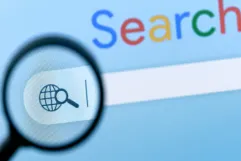
Citizens who consult their symptoms on the Internet can reach mistaken conclusions, due to a lack of knowledge or they may fall into the suggestive traps of treatments that have no scientific studies backing them up.
As explained by the French philosopher Éric Sadin, in his essential essay The era of the individual despot, today’s technologies are causing a (false) feeling of virtual total independence and they tend to reaffirm our subjectivity. Trapped in the “black hole” of our mobile phones, engrossed in the information that is offered and indifferent to the existence of others, “individuals find themselves wrapped up in their own halos that isolate them from everything that is presumed to be distant or inappropriate to them.”
This, in the field of health, can have particularly serious consequences. Science, obviously, does not reflect unfounded opinions, but rather corroborates its research subjecting them to strict verification processes. The temptation to let ourselves be taken in by promises of unproven alternative therapies, “miraculous” supplements or recommendations by people with no professional qualifications must be avoided at all costs, if we don’t want to risk paying a high price.
Accordingly, in 2025, the Spanish Ministry of Health launched a campaign “Remedies always backed by scientific evidence”, which seeks to offer clear, accessible and verified information, responding to some of people’s most frequent queries. This is aimed at fighting against the “infoxication” that can be found in an uncontrollable amount of Internet publications.
This risks of consulting “Doctor Google”
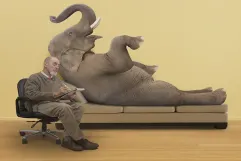
In order to talk about the possible changes in patients’ behaviour, we interviewed Dr. Cristian Herrera, a doctor from the Internal Medicine Unit from the Clinica HLA Vistahermosa Alicante. In the words of this prestigious healthcare professional, “in recent times, we find ourselves faced with different people who check the possible illnesses associated to their symptoms on the Internet before visiting the doctor. This means that they make evaluations that might be mistaken or that require diagnosis tests that are not suitable for their case.” At times, when they do not obtain the answer they expected from their doctor, they generate mistrust towards them, which could end up affecting the evolution of their ailment.
For Dr. Jordi Morillas, Head of Service at the Intensive Medicine Hospital in Barcelona, with whom we have also talked, “there is a before and after regarding ChatGPT. In the era when many patients consulted Google, they used to arrive at the surgery quite confused and with a highly pessimistic view of their possible state of health. Now, with AI, they try to individualise their diagnosis and this makes them have more questions.”
Speed as the enemy
Another common trend is that, as a result of today’s immediacy-based times, patients demand professionals to give them an immediate diagnosis. “There are tests that can take some time. In many cases, a test marks the need to carry out another one after it, which can delay the diagnosis more. There are technical reasons that explain why the doctor needs a certain amount of time to reach a well-founded conclusion,” Dr. Herrera tells us.
In Dr. Morillas’ opinion, “the essential point is that the doctor is able to create trust in their patients. In Medicine, we have several words to indicate that we do not know the origin of an illness: idiopathic, essential, cryptogenic, primary… the lack of information is what causes most uncertainty. For this reason, we sit down every day with patients and their families to explain in the most comprehensive way possible everything that we know about their ailment.”
Therefore, we must learn to follow the protocols that the accredited professionals give us, without attempting to access to “short cuts” that do not make the correct identification of our possible ailment easier. As is indicated by Dr. Herrera, “the criteria used by the doctors and nurses that look after us will always be more substantiated than any Internet video.”
There are no alternative therapies
As indicated by Dr. Rosa Arroyo, Second Vice-president of the Spanish Medical Association Organisation (OMC) and coordinator of the Observatory Against Pseudoscience at the same organisation, “there is no alternative medicine, there is medicine based on evidence and under this commitment we must continue working (…) on actions such as the promotion of healthcare education and on managing to regulate healthcare publications.”
The same opinion is held by Dr. Herrera, who does not hesitate to affirm that “miracle cures are always a lie”. This internist encourages us to leave behind “magical thinking”, which spreads the unfailing goodness of “natural products”: “A large part of the drugs that have shown their effectivity in clinical studies have been synthetised in laboratories from products that are found in nature. The natural label is not a guarantee in itself, rather something that should generate a sense of warning. We should take into account that most poisons are also natural.”
The professionals from the healthcare sector are clear, as shown by Dr. Arroyo, that “the fight against fraud is not a corporativist element,” but rather a “defence of consumers and users’ interests against pseudo-therapies and mala praxis.”