Caring for and preventing
It is important to not remove the skin that covers the blister, as it acts as a barrier against bacteria or possible rubbing.
We have all had a friction blister on the hand or foot at some point, especially in summer and autumn, when we spend more time on our feet and sweat more. These small sacs of skin filled with fluid usually appear as a response to an external aggression, usually rubbing or heat, as well as skin diseases.
The fluid is a mixture of blood plasma, water and proteins that the body has produced to protect the area (like a natural bandage that protects the damaged tissue from infections and knocks). Although it is usually transparent, it can darken if there is blood present.
The most common reasons for their appearance are:
- Continuous rubbing: repeated contact with rough surfaces, especially when walking barefoot or wearing footwear that does not fit the foot well, can cause blisters.
- Excessive sweating: moisture makes the skin softer and more vulnerable, making it easier for friction to end up damaging it.
- High temperatures: walking without protection on very hot surfaces can cause injuries and blisters on the skin.
- Infections: certain infections caused by bacteria or fungi can affect the most superficial layers of the skin and cause the appearance of blisters.
- Circulation problems: poor blood supply can compromise the tissues and promote inflammation, injuries and the appearance of wounds.
Care
In general, a blister usually heals in 5 to 10 days if it is treated properly. For this, it is necessary to avoid pressure and friction: no tight shoes, rough fabrics or activities that irritate the area.
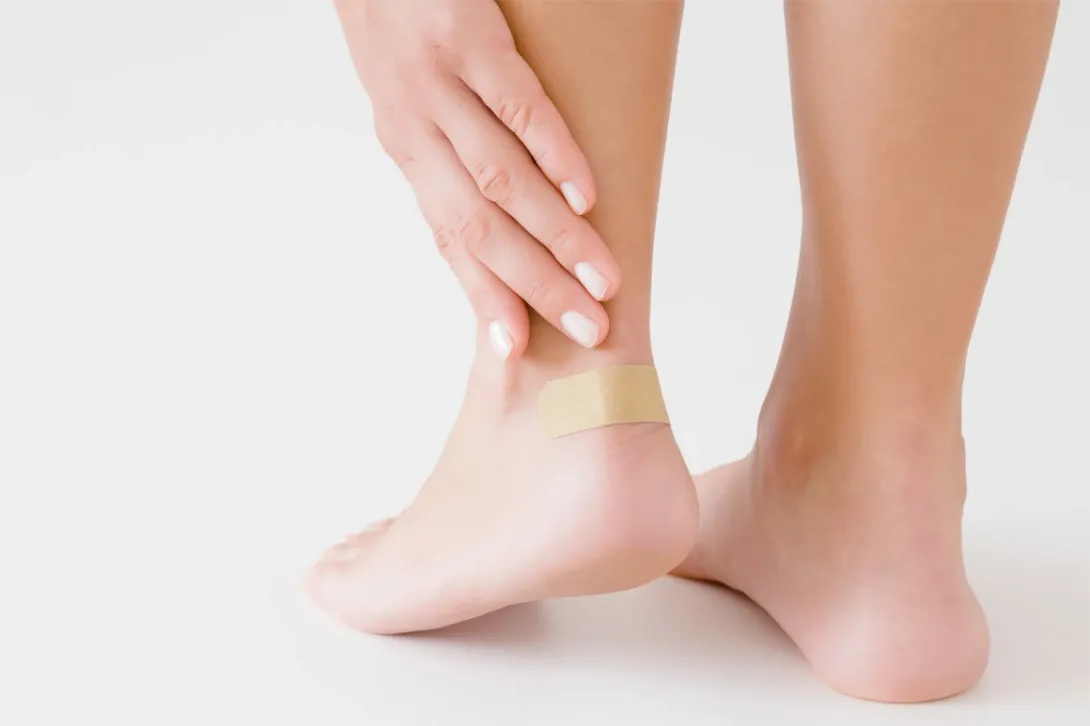
You should wash the area with soap and water and cover the blister, to avoid rubbing, with an adhesive bandage, a sterile gauze or a dressing. Natural products such as aloe vera or petroleum jelly can help with healing, once the fluid-filled sac has drained. If the blister shows signs of infection, you should see a doctor as soon as possible.