Which countries will achieve carbon neutrality by 2050?
Ten years after the Paris Agreement, the current geopolitical climate makes us question whether the climate targets are still achievable or not.
When COP21 concluded in 2015, representatives from 193 countries, including the entire European Union, enthusiastically applauded the decisions that had been taken. The so-called Paris Agreement replaced the 1997 Kyoto Protocol as the global roadmap for tackling the effects of climate change.
The signatories to that agreement legally committed to doing everything possible to prevent global temperatures from rising more than 2ºC above pre-industrial levels. To this end, Article 4 of the treaty committed signatories to achieving carbon neutrality before 2050.
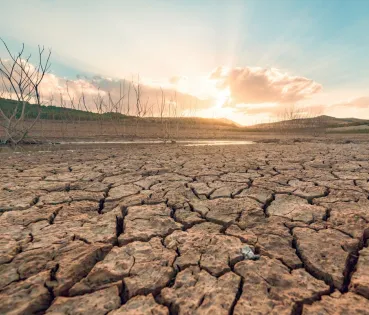
A decade later, although the planet’s temperature has slightly decreased compared to initial projections, extreme weather events have, unfortunately, become commonplace. Furthermore, 2024 was the hottest year on record globally, already exceeding 1.5° above pre-industrial levels.
But what does 'carbon neutrality' mean?
While the planet has experienced numerous climate changes throughout its existence due to natural causes, the current rise in temperatures and the increase in extreme weather events (torrential rainfall and prolonged droughts) have been proven to have an anthropogenic cause. That is, they are due to human activity.
The objective of achieving this neutrality by 2050 was supported by the vast majority of countries that signed the COP21 Agreements. In the European Union, in 2019 the European Green Deal was signed, obliging all Member States to take the necessary measures to meet this target.
In addition, economic measures have also been adopted, such as carbon offsetting and the carbon border adjustment mechanism. These measures involve investment in non-polluting sectors (renewable energy and energy efficiency) and the imposition of higher prices on imported goods from countries with less stringent environmental regulations.
Which countries will achieve carbon neutrality by 2050?
To date, six of the 193 countries have already achieved this neutrality. Bhutan, Suriname, Gabon, Benin, Guyana, and Comoros are carbon neutral or even carbon negative and therefore lead the race towards net emissions. Even so, these are countries with abundant vegetation and limited industry, so their impact on the global total is very small.
On the other hand, European legislation is firm in its commitment, and EU Member States as a whole are highly engaged, with Spain standing out as a leader within the OECD in the energy transition. This is largely thanks to the significant investments made in recent years in renewable energy. Norway also stands out as a leader in hydroelectric power.
In addition, Asian countries such as Japan, Singapore and Vietnam also maintain a firm commitment to carbon neutrality, as do American countries such as Chile, Brazil, Colombia, Mexico and Peru.

China, the United States and Russia are destabilising climate objectives
The case of China, however, is controversial. Having become the world’s factory in recent decades, it is one of the five largest emitters of CO₂ globally. For this reason, the energy transition toward carbon neutrality represents such a large-scale transformation that its leaders have decided to postpone their commitment until 2060. Nevertheless, recently, it has become the undisputed leader in electric mobility and has presented several plans to move towards these targets.
On the negative side, there is Russia, which, like China, has postponed its commitment until 2060 but has not presented any clear plan or firm legislation indicating progress towards that goal.
One can only hope that Trump’s allies around the world do not follow the same logic; otherwise, everything achieved so far will come to nothing, and the planet’s climate future will be much darker.