How is used cooking oil recycled?
Used cooking oil is a pollutant for the environment and our health. Learn how to recycle it and how to give it a more creative second life.
There is growing awareness of the need to adopt sustainable habits to protect the planet, such as recycling. We are used to separating plastic from organic waste and cardboard, but there are other types of waste that are more difficult to classify and are often disposed of incorrectly, such as used cooking oil.
Oil is an essential ingredient used daily to prepare all kinds of dishes and recipes. In fact, last October, 2,311.60 million kg of vegetable fat were consumed in Spain, 2.37% more than in 2024.
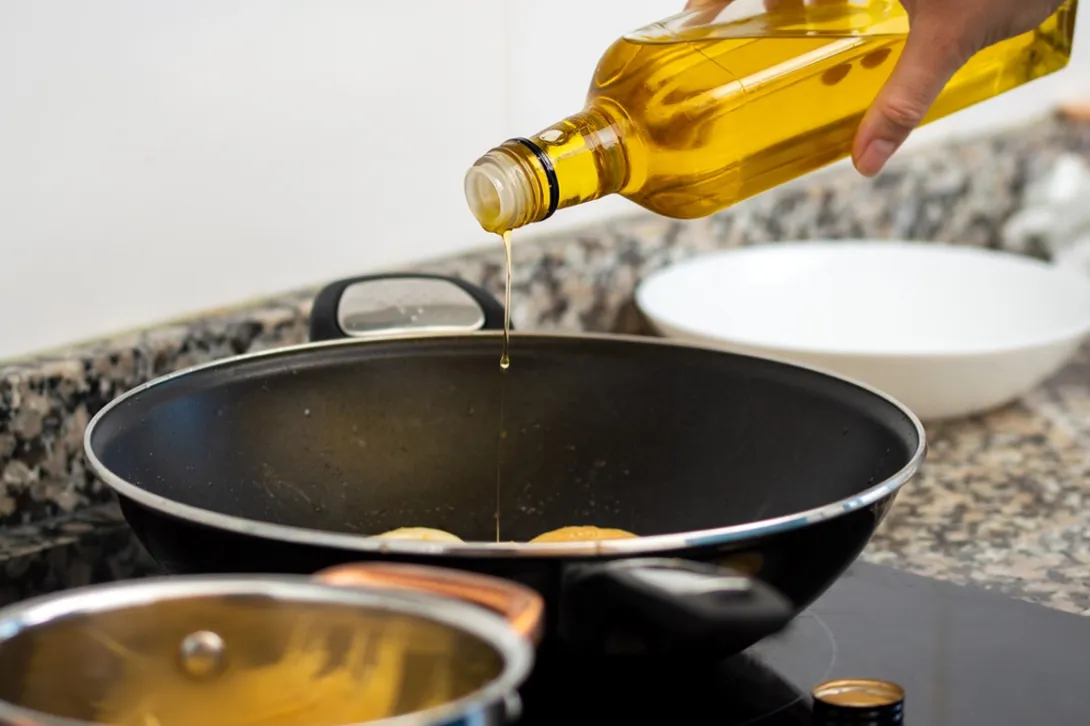
However, once it has been used for frying or cooking, oil becomes a complex waste product to manage. In most cases it ends up being poured down the drain, which causes environmental problems, complicates its treatment at wastewater plants and poses a risk to public health.
Why shouldn’t we pour used cooking oil down the sink?
Oil has a high polluting capacity and is very difficult to remove. It is estimated that one litre can contaminate up to one thousand litres of water and remain in the environment for years. When it is poured down the sink, vegetable fat ends up contaminating seas and rivers. As it spreads, it creates a film on the surface of the water that prevents oxygen from passing through and ultimately suffocates aquatic species.
In addition, it contributes to blocked pipes and complicates the treatment of wastewater, as warned by the Ministry for the Ecological Transition and the Demographic Challenge. When oil travels through sewers, vegetable fat residues mix with wipes and other waste until they form masses weighing tonnes known as fatbergs, which obstruct infrastructure and generate high maintenance costs.
How can used oil be recycled properly?
Even the small remnants of vegetable fat left in the frying pan after cooking a burger —which we often mistakenly clean away with a scouring pad—should be disposed of properly. The first step is to wait for the utensil to cool down, remove the excess vegetable fat with paper and then throw it in the general waste bin.
However, the issue arises when we have large quantities of used oil after frying or cooking. In this case, the first step is to let it cool and find a sturdy container, such as a plastic bottle or jerrycan. This will be used to store the previously filtered oil.
Once the container is full, it should be taken to a local recycling centre or placed in containers that accept this type of waste. Recycled oil is used to produce biodiesel, a more environmentally friendly and less polluting fuel than fossil fuels.
Other ways to reuse used oil at home
The simplest and best-known way to make use of oil is to reuse it for cooking, an option that also helps to save money. However, it is important to filter it when it is used frequently, as solid food residues may remain. In addition, we should separate the cooking oil used to prepare meat from that used for fish, as the flavours may mix:
The useful life of cooking oil does not end after it has been used, so in addition to recycling it, it can also be reused at home in different ways. With a little creativity and imagination, it is possible to give used cooking oil a second life and avoid polluting our environment and harming our health.