Chernobyl: 40 years of stories
Book and series continue to challenge the way in which we remember that wound of the twentieth century.
The explosion of reactor 4 of the Vladimir Ilyich Lenin nuclear power plant, on April 26, 1986, eighteen kilometres from the city of Chernobyl, Belarus, was a turning point in global history, marking the decline of a political model that did not know how to manage and to communicate a catastrophe of this magnitude. At the same time, it forced the whole of humanity to rethink how scientific progress was managed, what its costs were and what dangers lurked.
What should never have happened, however, happened. And it was then that the need arose to find words and images that could explain not only the political and scientific dimension of the event, but also its cost in the common imagination, emotions and, ultimately, the most human dimension.
Intimate history to understand the tragedy
Straddling essay, journalistic account, historiography and narrative, Voices from Chernobyl, by Svetlana Alexievich, remains, today, the best and most complete (and complex) of the texts that try to approach tragedy.
Awarded the Nobel Prize in 2015, Alexievich has based her literary production on the idea of polyphony, which we can see in Voices from Chernobyl. Trained and early journalists, his works use the collage of testimonies to reach more intimate places of the human experience than would be reached with an exhibition of data and facts.
This can be seen in her other famous works, such as The Unwomanly Face of War, from 1985, in which she seeks testimonies about the participation of Russian women in World War II (or Great Patriotic War, in Russian-Soviet terminology); Boys in Zinc, from 1990, where he presents the testimonies of mothers of soldiers from the war in Afghanistan; or his chronicles on the fall of the Soviet Union, Enchanted by Death, from 1993 or Second Hand Time. The End of Homo Soviéticus, his latest work, published in 2013.
A faithful portrait or opportunistic criticism?
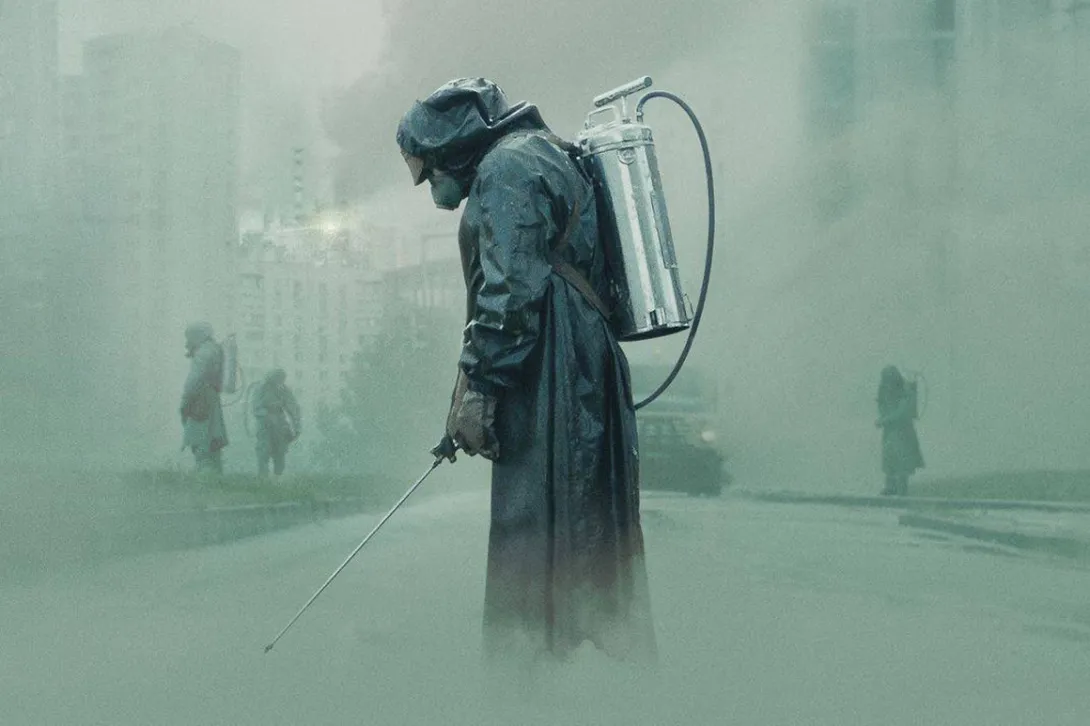
In 2019, thirty-three years after the conflict, and twenty years after Alexievich’s publication, he revived his popularity thanks to the HBO miniseries Chernobyl, created and written by Craig Mazin and directed by Johan Renck. Although numerous documentaries had already been produced that reflected the scale of the tragedy, that series helped to convey it through fictional storytelling and enabled it to reach the mainstream public around the world.
Celebrated for its attention to detail and apparent historical accuracy, the work of Svetlana Alexievich stands out as one of the main documentary sources. Even so, the main difference between the two lies in the narrative point of view. The series highlights the chain of technical and political errors that led to the explosion, as well as the sacrifice of the thousands of workers who tried to contain the catastrophe, as well as, and more importantly, the culture of secrecy of the Soviet state. In this way, the series thus transforms the disaster into an understandable story, pointing out who was in charge, the decisions and their consequences.
Through small historical licenses, as well as technical elements to generate an oppressive atmosphere and the portrait of both the directors of the plant and state representatives, the series focused its main efforts on portraying the political dimension of the conflict, drawing a Hollywood-style Soviet Union, whose purpose remains, as during the Cold War, to discredit the capitalist alternative. A self-confirmation of Fukuyama’s The End of Historyand the last man which, in 2026, is not delivering on several fronts.
In short, the series approaches the facts with remarkable accuracy and it is technically impeccable, making it a very good consumer product, although it can be controversial in its most conceptual aspect. However, together with Alexievich’s book, it is a splendid portrait of a catastrophe whose consequences continue to haunt us on its fortieth anniversary.