Architects of the new global economy
Brussels hosted the Cooperative and Mutual Leaders’ Summit in June, a meeting that brought together the executives of the cooperative enterprises.
Its aim is to act as architects in designing a new global economy, more equitable and sustainable, in which the value produced by the cooperative sector is doubled, going from 2.7 to 5 trillion dollars in the year 2035.
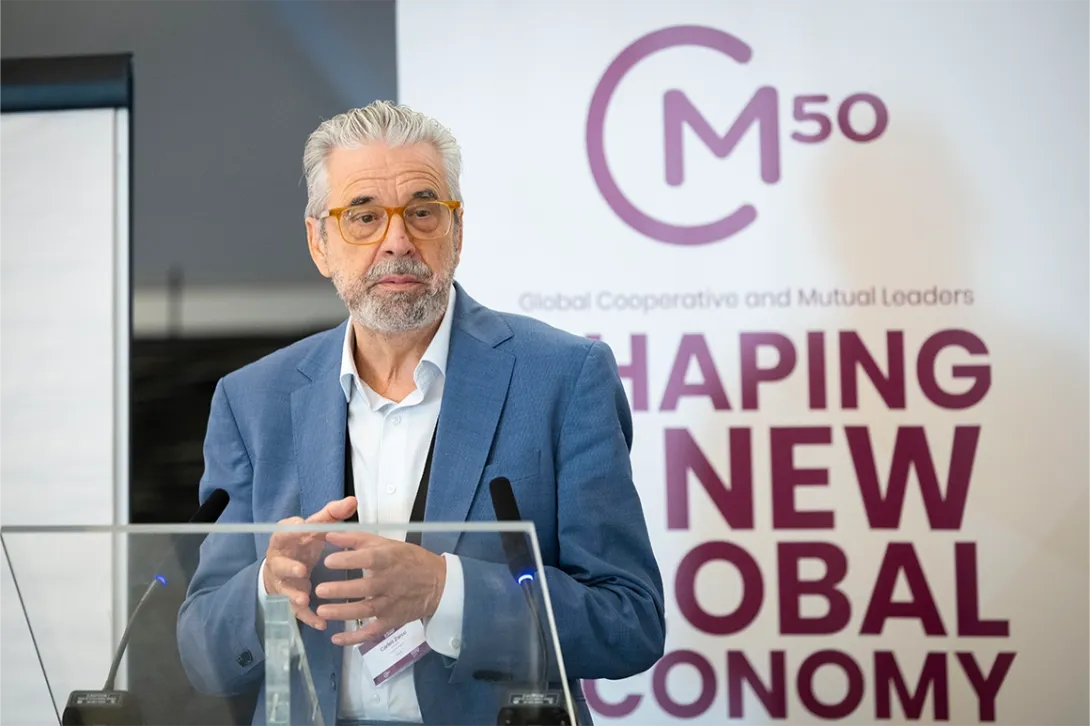
In this context, the director general of the Fundación Espriu, Carlos Zarco, played a leading role by taking part in the panel entitled Cooperative B2B trade as the future of a new global economy. This space addressed directly the B2B market pillar of the CM50, designed to transform multinational intercooperation into a large-scale business growth strategy.
Iniciative to promote sustainable food systems
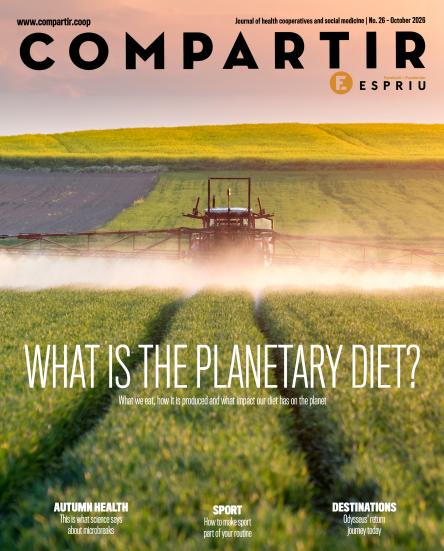
Likewise, the Fundación Espriu took part in the presentation of the Healthy Food Systems project, which it promotes in collaboration with the Indian company IFFCO and the Acorn platform of the cooperative bank Rabobank. Inspired by the innovative One Health approach (‘one single health’) and the debates of the EAT-Lancet commission, this initiative seeks to connect food production and consumption sustainably through three critical areas: regenerative agriculture, pricing mechanisms in the carbon capture market and the promotion of healthy diets.
Intercooperation between agricultural, health, financial and food distribution cooperatives constitutes the strategic advantage on which this ambitious project is based.
A roadmap for the International Year of Cooperatives in 2035
The summit also served to deepen other fundamental commitments of the CM50, among which Coop Cloud stands out, a sovereign digital infrastructure equipped with artificial intelligence to unify the data ecosystems of the cooperative sector and avoid dependence on other platforms.
In the educational field, agreements were established with prestigious universities to incorporate into their curricula the particular features of the cooperative economy. Finally, the commitment to society will materialise in projects aimed at deploying cooperative experience in health, housing and food during the reconstruction phases following crises and natural disasters.
This summit represents the consolidation of a strategic path that began in Madrid in May 2025. The reflections and debates of that foundational meeting, sponsored by Assistència Sanitària and Asisa, gave rise to the Contract for a New Global Economy, which the members of the CM50 ratified in Doha during the Second World Social Summit, in November 2025.
With the Brussels meeting, the CM50 reaffirms its structure and defines the objectives that will guide its work over the next decade so that the celebration of the next International Year of Cooperatives in 2035 consolidates the cooperative enterprise model as the axis of a new global economy.