What we know today that we didn't know yesterday
We are living through a revolutionary moment in health research, which allows us to be optimistic about the treatment of many diseases that, to this day, continue to be major health problems worldwide.
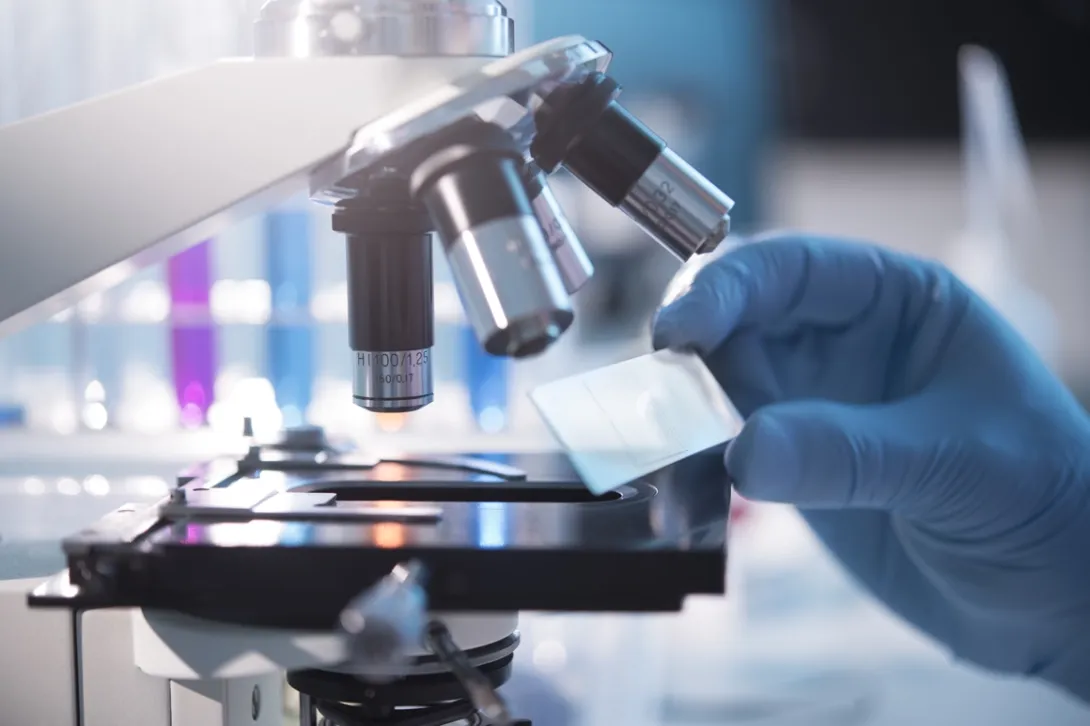
Without a doubt, medical research is the fundamental pillar that allows healthcare to continue to evolve. Thanks to the work of the scientists involved in these projects, new treatments, technologies, protocols and prevention strategies can be developed.
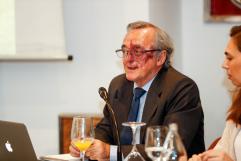
As Dr. Antoni Castells, gastroenterologist, medical director of the Hospital Clínic de Barcelona and director of the Gastrointestinal and Pancreatic Oncology Research Group at IDIBAPS (August Pi i Sunyer Biomedical Research Institute) explains, health professionals "know very well that it is not possible to offer quality care without good research that enables us to answer the questions that often arise when caring for patients".
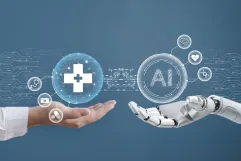
Furthermore, we must be aware of the fact that we are living in a particularly interesting time for research work, in which "disruptions take place in a matter of months, rather than years", as Dr. Concepción Gómez Gavara, specialist in Hepatobiliary, Pancreatic and Transplant Surgery at the Hospital de Barcelona and researcher in the field of organ evaluation with Artificial Intelligence (AI), points out.
His opinion is aligned with that of Dr. José Manuel Felices, a specialist in Diagnostic and Interventional Radiology at the HLA La Vega Hospital in Murcia, who is convinced that "we are experiencing progress in the results of research that I describe as exponential, especially thanks to the application of Artificial Intelligence". And also with that of Dr. Javier Pérez Pallarés, specialist in Pneumology and Interventional Pneumology, head of Pneumology at the aforementioned HLA La Vega Hospital in Murcia, who is very optimistic regarding the potential of integrating technology into medical practice.
However, AI should not become a substitute that depersonalizes health care. On the contrary, the point should be that "it serves so that we can see how much it really contributes to us or in which activities we are still irreplaceable," says Dr. Felices. For this radiologist, it is important that the time savings that technology can offer do not serve to increase the rate of production, "but to make us shine even more as human beings." In his opinion, it is very important that the reduction in workload should enable "us to explain more and better to the patient what is happening and what treatments we are going to apply. The goal is that it should help improve communication between doctor and patient."
Research is not an expense, it is an investment
Currently, some public health problems such as cancer or cardiovascular and degenerative diseases have become the main reasons for admission to hospitals. This means allocating a large amount of health resources. Fortunately, "more and more people realize that research is not an expense, but an investment," says Dr. Castells.
To continue moving in this direction of commitment to science, at the end of last year the Council of Ministers of the Spanish Government agreed to allocate more than 152 million euros to the 2026 Strategic Health Action, which is — as the Minister of Science, Innovation and Universities Diana Morant has explained is — "the main call for applications to finance research in the biomedical and health sciences with the greatest impact on the well-being of citizens".
The minister explained that, in this call for applications, topics such as childhood cancer research, research into neurodegenerative diseases such as Alzheimer's, infectious diseases and research for pandemic preparedness are prioritized.