The fantasy book that has become a screen legend
The 25th anniversary of the first film in the ‘Lord of the Rings’ is an opportunity to revisit the trilogy that is well-established as a classic.
Since its first publication in 1954, several generations of young readers (whether in age or in spirit) have dreamed of seeing the rich and lush world of The Lord of the Rings adapted for the big screen. Although there was an initial attempt in the 1978 animated film by Ralph Bakshi, now a cult classic, it was the film trilogy released in the first years of the 21st century – the first instalment of which is now twenty-five years old – that succeeded in making the dreams of millions of fans of the books come true.
One of those young readers was none other than the director who would direct the films, Peter Jackson, who discovered J. R. R. Tolkien’s novels through Bakshi’s film. Apparently, at the age of 17, the New Zealander gobbled up the entire book during a train journey lasting some twenty hours. That first impression stayed with him over the years.
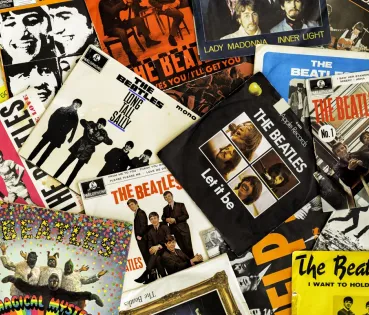
Jackson wasn’t the first to come up with the idea of bringing Tolkien’s work to movie theatres. Interestingly, according to Variety magazine, the biggest stars of 1960s pop music (more famous than Jesus Christ, according to John Lennon), The Beatles themselves, wanted to star in an adaptation, in which Lennon would play Gollum; Paul McCartney, Frodo; George Harrison would play Gandalf; and Ringo Starr, Sam.
In their view, the ideal director for the job was Stanley Kubrick. When he turned down the project, deeming it ‘unfilmable’, other surprising names were mooted – Michelangelo Antonioni, David Lean or Richard Lester – but the project fell through.
A dream come true
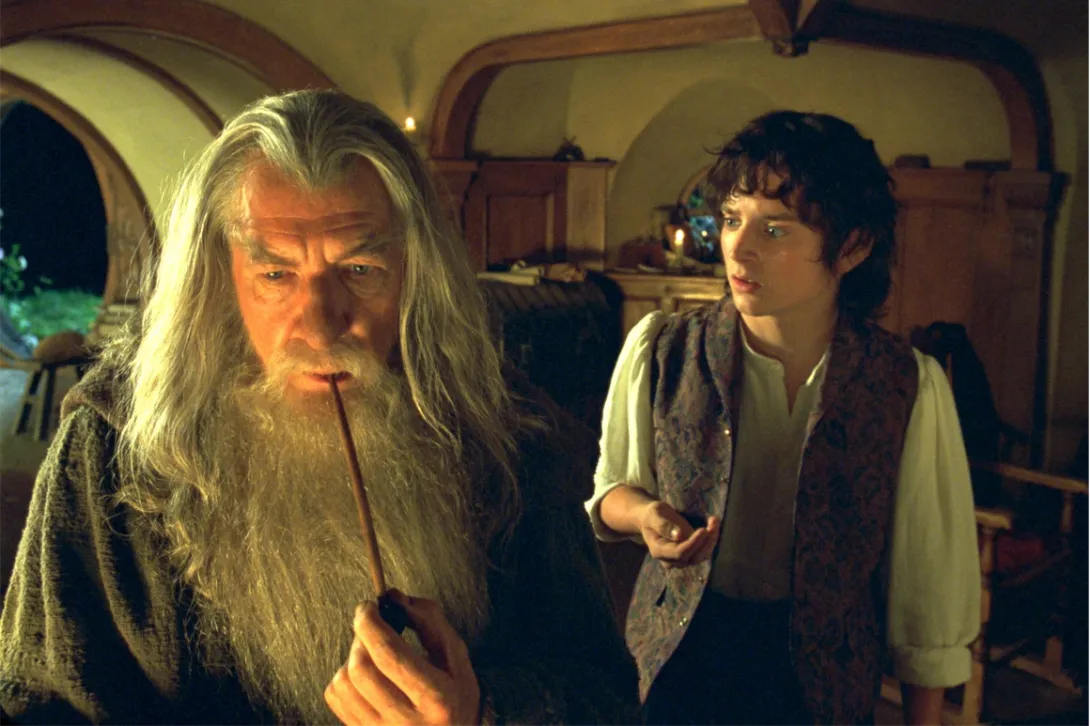
Jackson chose a more chronological approach to the story, making Frodo’s adventures the central theme. The director had a large team to design the world of Middle-earth, including figures such as Alan Lee, who had illustrated Tolkien’s book. The production managed to combine up-and-coming young actors, such as Elijah Wood and Dominic Monaghan, with true legends of the theatre and horror cinema, such as Ian McKellen and Christopher Lee.
All three films were shot simultaneously – to save costs and ensure continuity – at over 150 locations across New Zealand over a period of 438 days. Each film underwent a further year of post-production, which was used to develop numerous revolutionary visual and sound effects that have ultimately shaped the future of many major productions in the 21st century.
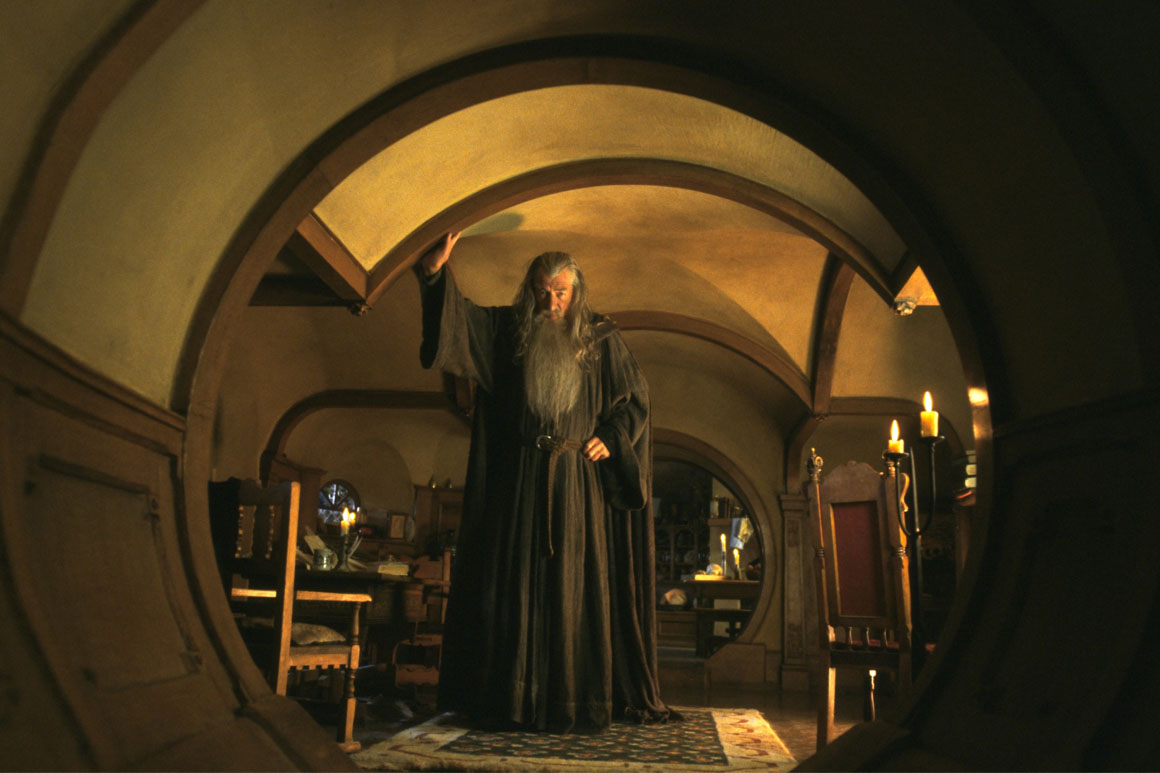
The trilogy was very warmly received by critics and audiences alike, as well as winning a host of awards, including seventeen Oscars. Jackson, for his part, realised his childhood dream of turning Tolkien’s work into a thrilling cinematic experience. His universe has continued to expand through films, and live-action and animated series. At the same time, his legacy can be spotted in other productions, such as Game of Thrones.
Chronological sequence of The Lord of the Rings
- The Rings of Power (2022): This Amazon Prime series spans two seasons, exploring the Second Age of Middle-earth and depicting the rise of Sauron, the forging of the rings, and the splendour of kingdoms such as Númenor. Although it is based on Tolkien’s appendices and short stories, it is not directed by Peter Jackson.
- The Hobbit: Between the late 1920s and early 1930s, Tolkien wrote the adventures of Bilbo Baggins for his children, set in the Third Age of the Sun, which were finally published as a single volume in 1937. Peter Jackson divided the book into a trilogy, adding events from the later books.
- The Hobbit: An Unexpected Journey (2012): Tells the story of Bilbo’s departure from the Shire and the first perils he faces.
- The Desolation of Smaug (2013): Follows the ongoing journey up until the arrival at Erebor, located in the Dwarf Kingdom.
- The Battle of the Five Armies (2014): Focuses on the death of Smaug (the dragon) and the events that follow until they get back home.
- The Lord of the Rings: His most ambitious work was written in stages between 1937 and 1949. The book was also adapted into three films.
- The Fellowship of the Ring (2001): Set sixty years after The Hobbit, it tells the story of how Frodo Baggins came to have the Ring, and how he fled the Shire on a mission to destroy it.
- The Two Towers (2002): With two main plotlines, it follows, on the one hand, the journeys of Aragorn, Legolas and Gimli; and, on the other, the journey of Frodo and Sam, who are forced to accept Gollum as their guide to enter Mordor.
- The Return of the King (2003): Following a colossal battle, Aragorn is crowned as the King of Men, whilst Frodo and Sam manage to cast the Ring into the flames of the volcano.