Cooperatives promote healthcare in Africa
Healthcare cooperatives are gaining prominence in Africa as a means to reduce the financial barriers that hinder access to medical care.
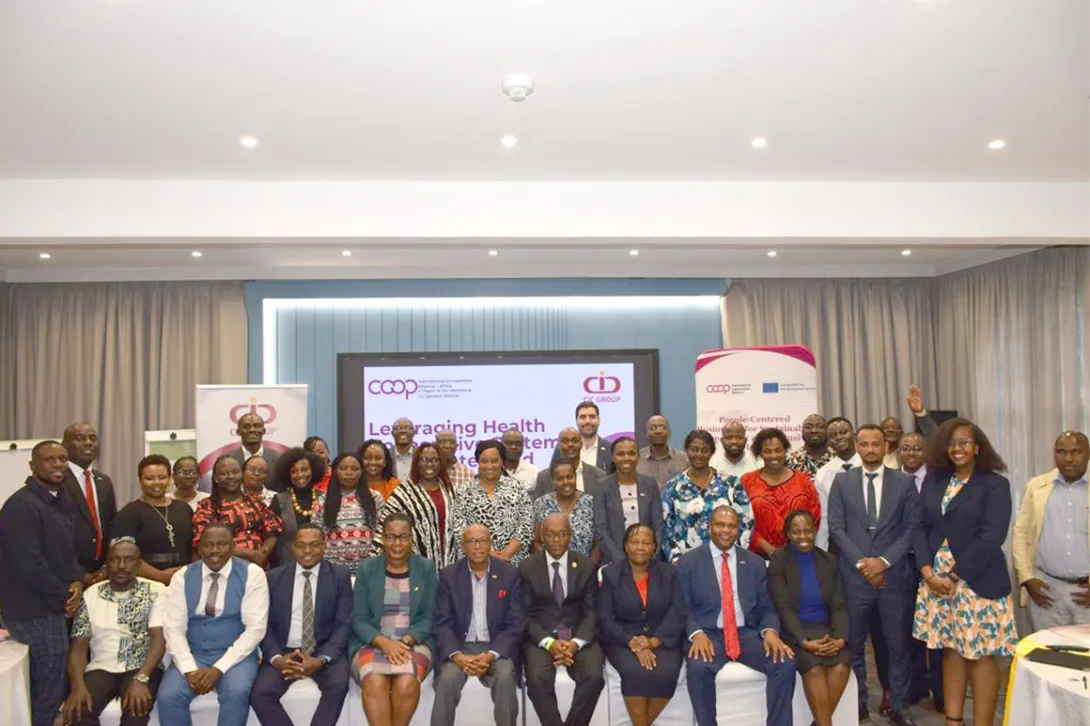
On 30 April, Nairobi hosted the conference “Leveraging healthcare cooperatives to promote health and well-being in Africa”. The event, organised by the regional office of the International Co-operative Alliance in collaboration with CIC, a Kenyan co-operative insurance company, brought together sector leaders and public policy experts with the aim of mapping out a roadmap towards Universal Health Coverage through the co-operative model. Dr Carlos Zarco, director of the Espriu Foundation, took part in the event and highlighted the organisation’s commitment to the international development of cooperative healthcare.
The success of cooperative microinsurance
On a continent where millions of people lack health coverage, the event highlighted how cooperative microinsurance is succeeding in drastically reducing so-called out-of-pocket expenses – payments that people make directly because they have neither public nor private health coverage.
These unexpected out-of-pocket costs often have a catastrophic impact on families, forcing them to take on unmanageable debts or sell assets essential to their survival, such as land or livestock. Financial insecurity also leads to serious delays in medical treatment, which exacerbates illnesses and increases preventable mortality.
Given this reality, cooperatives are emerging as a tool with great potential to expand access to healthcare and strengthen the most vulnerable communities. This is why the conference discussions were dominated by the vision of a future in which the cooperative movement plays an essential role in African healthcare. Experts analysed a range of models that are already transforming the current landscape, focusing on microinsurance and healthcare professional-led cooperatives.
The focus was also on community healthcare systems, an innovative model in which patients themselves act as partners and managers of their own healthcare centres.