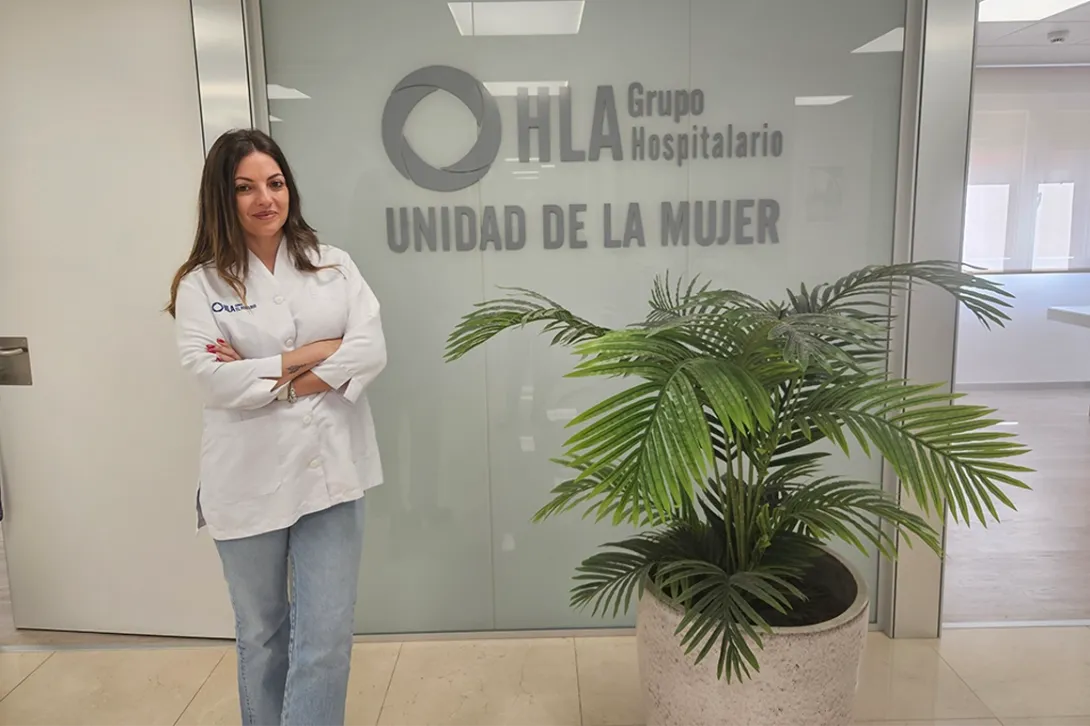
We spoke to Laura Alfonso, a psychonutritionist specialising in eating disorders, about the impact of social media on nutrition and health.
“Health is more a matter of balance and long-term sustainability”
With an online community that is growing as a result of her work raising awareness about food, Laura Alfaro states that true health is based on flexible habits and reflects on the confusion caused by unlimited access to nutrition content on social media.
In your practice, do you notice a difference between patients who come because they want to be healthier and those who come because they want to look good?
In my clinical practice I come across all sorts of cases, but when you delve deeper into a person’s life, a very high proportion of patients are dissatisfied with their physical appearance, and this has a very negative impact on their mental health. I often see a tendency, particularly among women, to compare themselves with other women or even with who they were 15 years ago, without taking into account the natural changes that occur over time, such as ageing, hormonal changes, pregnancies or their own current lifestyle. There is certainly a difference between those whose goals are linked to health and those who do so primarily for aesthetic reasons, although the two objectives are often intertwined. Patients seeking better health tend to focus more on improving their habits, boosting their energy levels, preventing illness or feeling better about themselves in the long term. In contrast, those who prioritise their physical appearance tend to be more concerned about their weight, body image or meeting certain socially imposed aesthetic standards. In practice, however, those two motivations often overlap.
We are living in an age where we have access to more information about health and nutrition than ever before. However, eating disorders remain a growing concern. How do you make sense of this apparent contradiction?
I believe we are currently living in an age where we have access to a vast amount of information, but that does not mean that all of it is reliable or scientifically sound. These days, anyone with access to the internet or social media can share content without any form of oversight or evidence to back it up, and in clinical practice this causes a great deal of confusion. I come across patients who don’t know what information to believe because they are constantly receiving completely contradictory messages. There are also cases of people who think they know more about nutrition simply because they’ve watched very short videos on social media or because someone has claimed that a certain diet “worked for them”. The problem is that personal experiences are often generalised as if they were valid recommendations for everyone, when in fact each patient requires an individualised assessment based on scientific evidence.
In fact, recent studies suggest that only between 4 and 5% of the nutrition content consumed on TikTok comes from healthcare professionals. How does that affect your practice?
Many patients arrive with a fear of certain foods, very extreme views on nutrition or unrealistic expectations because they have seen advice on social media without any professional backing. Furthermore, information on TikTok tends to be very brief and simplified, which means that complex topics are explained without context. This causes a great deal of confusion and, at times, leads to unhealthy habits that then need to be addressed and corrected during consultations.
The content also seems to be targeted primarily at a female audience. Is the impact greater among women, or is it simply more visible?
In my opinion, the impact is indeed greater on women, although it is also true that among women it is more visible and a more socially acceptable subject of discussion. For years, there has been much more intense aesthetic pressure affecting female bodies, and social media has increased that pressure even further. Women’s wellbeing is constantly linked to physical appearance, thinness or certain “perfect” lifestyles. I often see how many women feel constant pressure to look after themselves, look good or meet certain standards that are sometimes unattainable. Even so, I’m also noticing increasing concern amongst men, particularly teenagers and/or young adults, although they probably find it harder to talk about it or seek help with these issues.
When it comes to nutrition, what habits do you think are essential in our daily routine and have a positive impact on our health?
There are small, everyday habits that can greatly improve our quality of life. Staying well hydrated, taking part in daily physical activity – even if it is only moderate – regularly including fruit and vegetables in our diet, and reducing the time we spend in front of screens are simple steps that can have a very positive effect on both our physical and emotional health.
And are there any myths about personal care that are particularly difficult to debunk because, deep down, people don’t want them to be untrue?
Yes, especially anything to do with “quick fixes”. Many people want to believe that there is a miracle diet, a detox product or a specific method that will bring about significant physical changes without any effort or persistence. I think it’s hard to debunk these myths because they sell a very appealing idea: getting quick and easy results. It’s also very common to hear the idea that to be healthy you have to constantly monitor your diet or exercise, when in fact health is more about balance and long-term sustainability. Sometimes, accepting that there are no magic formulas and that real change takes time is precisely what is hardest to come to terms with.
Dr Laura Alfaro
Psychonutritionist specialising in eating disorders and Director of the Comprehensive Women’s Health Unit at HLA Clínica El Rosario.