What is celebrated on St John’s Eve?
24 June marks the birthday of St John the Baptist, a fest associated with bonfires, whose origins are related to ancient rituals linked to the Sun.
Like Twelfth Night, St John’s Eve is one of the most eagerly anticipated and widely celebrated occasions of the year. During the night of 23–24 June, people celebrate what is traditionally considered to be the shortest night of the year, which also marks the arrival of summer.
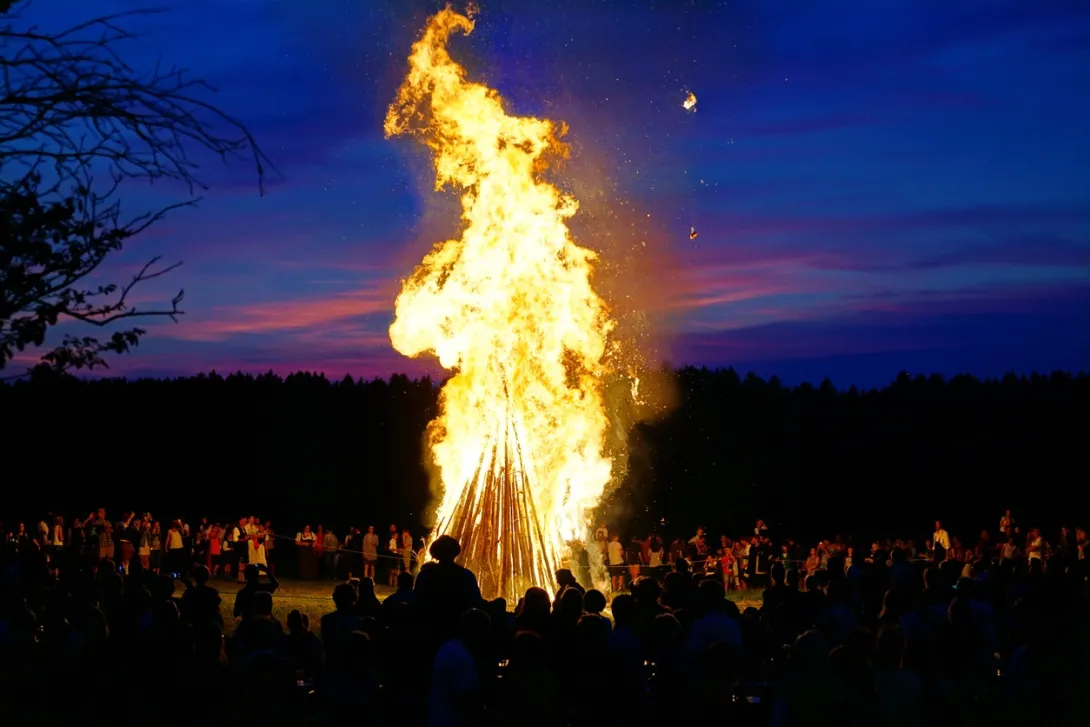
On this night, enormous bonfires are lit on beaches and in town squares, around which people gather with family and friends, laughing and dancing while fireworks light up the sky. Without a doubt, it is one of the most captivating summer celebrations for people of all ages. But do you really know the origins of St John’s Eve?
A celebration with pagan roots
Despite the name of this celebration, its origins date back to pre-Christian times. For centuries, pagan civilisations worshipped the Sun as a supreme deity representing life, prosperity and the natural order. One such festival took place during the summer solstice, around 21 June, and was known as Litha.
On this day, pagans celebrated the arrival of the harvest season and the purifying power of fire. At the same time, they venerated the Sun on the shortest night of the year in the hope of bringing prosperity and warding off negative energies. For this reason, they lit large bonfires to drive away evil spirits and pay tribute to the greatest star in the sky.
Over time, Christianity absorbed many pagan celebrations, although most retained part of their original essence. The Catholic Church linked this festival to the birth of John the Baptist, commemorated on 24 June, just a few days after the ancient pagan celebration. This tradition has endured into the 21st century.
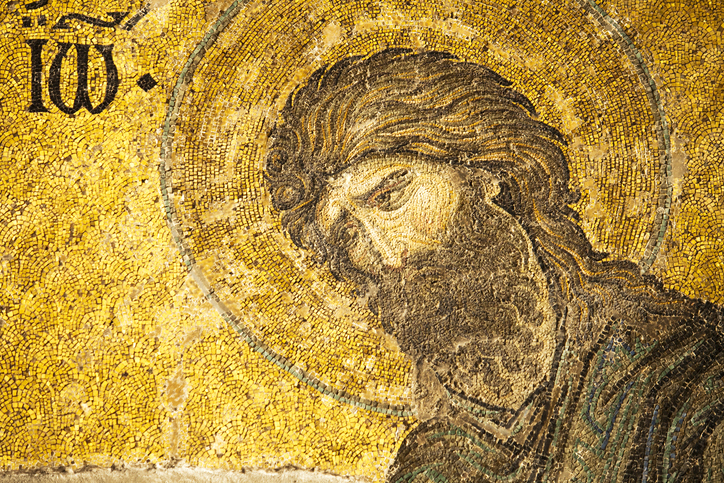
John was the son of Zechariah and Saint Elizabeth, a cousin of the Virgin Mary. According to Christian tradition, his father ordered a bonfire to be lit to announce the birth of his son during the night of 23–24 June. This is a rather unusual date in the liturgical calendar, as most religious feast days commemorate the death of saints.
St John’s Eve in other countries
However, St John’s Eve is not only celebrated on the Iberian Peninsula. In many parts of the world, such as the Nordic countries and various regions of South America, bonfires are also lit to celebrate the arrival of summer or, in the Southern Hemisphere, the arrival of winter.
These are some of the celebrations that take place in different corners of the world:
A night of magic and culinary tradition
St John’s Eve is a celebration that encourages people to let their inhibitions go and leave their everyday routines behind. Perhaps this is why so many people find the courage on this night to jump over bonfires, swim at midnight, or jump backward over the waves.
This lively night of rituals is accompanied by a rich culinary tradition. The traditional coca de Sant Joan, filled with angel hair squash, fruit, custard or chocolate and enjoyed in Catalonia; the grilled sardines typical of Andalusia and Galicia; and els macarrons de Sant Joan, traditionally eaten in Ibiza and Formentera, are just a few examples.
Beyond its religious or pagan origins, this celebration continues today to embody the idea of bidding farewell to the old, welcoming a new chapter, and inviting good fortune into our lives.