3 chess sets for enthusiasts and collectors
In addition to being considered an international sport, owning a chess set with a unique design is also a symbol of culture and aesthetic refinement.
Chess has stood the test of time and continues to retain its intellectual prestige as one of the oldest games in the world. Its origins date back to more than 1,500 years ago, and throughout history, it has managed to maintain its presence, its prestige and its international expansion.
The reason for its longevity may be related, in part, to its own structure. It is, essentially, a pure strategy game that demands logical thinking, anticipation and control with every move. Two players, face to face, 64 squares and 32 pieces that represent a complete system of confrontation that has been interpreted, for centuries, as a symbolic form of power, struggle and dominance of opposing forces.
The roots of chess
Historians place its origin in India, around the 6th century, as an adaptation of chaturanga. This game, originally designed for four players, represented the four divisions of the Indian army: infantry, cavalry, elephants and chariots. The ultimate objective was not to checkmate the king, as in chess, but to progressively eliminate the opponents.
From there, the game spread to Persia, where it was transformed into shatranj, a version much closer to modern chess. From that point, it reached the Arab world and eventually arrived in Europe between the 9th and 10th centuries through trade and cultural exchange.
During the Middle Ages, playing chess was a pastime linked to the court, the nobility and certain religious and intellectual circles. In fact, it is documented in various European courts as a game associated with the development of strategic thinking. It is no coincidence that the so-called Book of Chess, Dice and Tables, commissioned by Alfonso X in 1283, already included different chess variants played at the time.
An timeless game with a unique design
The major change came at the end of the 15th century, with modifications to the rules and the pieces. The queen gained her modern move, and the game became more dynamic, faster and more tactical. The first step towards becoming the modern chess we know today. In the 19th century, the first international tournaments began to be organised and, over time, names that would go down in history emerged, such as Capablanca, Fischer or Karpov.
Today, chess has expanded to become a sport recognised at an international level, and it has become popular as a design element. Owning a hand-carved board made with high-quality materials is, for many enthusiasts and collectors, a decorative expression of personality and a symbol of elegance.
Three collectable boards
The Staunton set: the classic of classics
1 of 3
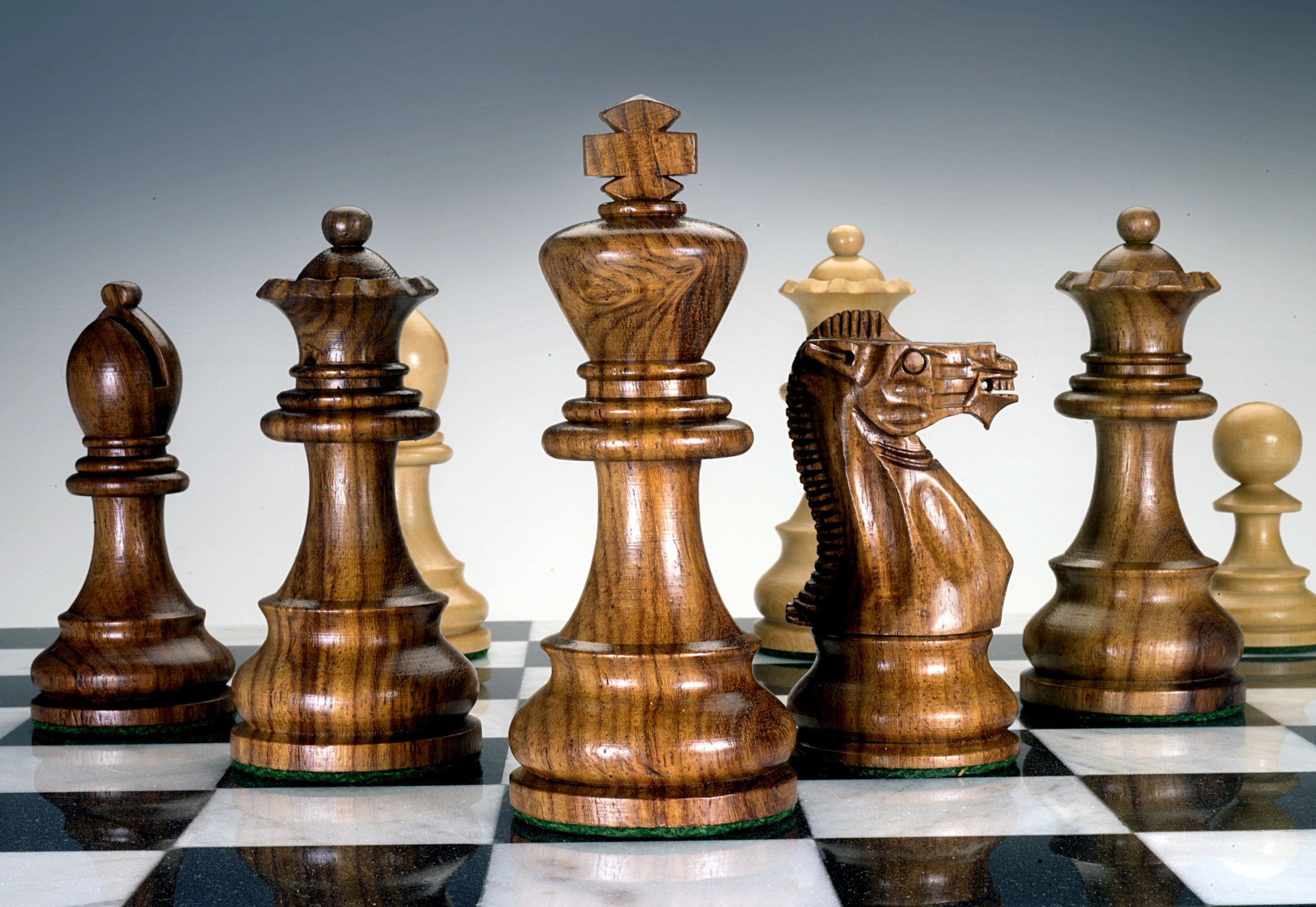
When discussing historic chess pieces, one must mention the Staunton style, launched in 1849. This design marked a turning point in chess sets, eventually becoming the standard that is still used in official competitions.
Its success was due, above all, to its simple, balanced design, which is easy to identify during a game. The pieces are comfortable to handle, have harmonious proportions, and avoid the confusion often found in other models. Added to this was the influence of Howard Staunton, one of the most prestigious chess players of the 19th century, who contributed to its widespread adoption and popularity.
Today, sets inspired by the original Staunton remain among the most prized by enthusiasts and collectors. Luxury versions are usually crafted from fine woods, such as Burmese rosewood or aged and lacquered boxwood, and feature hand-carved pieces that faithfully reproduce the details of the original 19th-century design.

The Dubrovnik set: the all-time favorite of the great Fischer
2 of 3
Few chess sets can claim to be associated with a name as significant as that of Bobby Fischer, the legendary American chess player. On several occasions, Fischer himself cited the Dubrovnik set (1950) as his favourite.
This model was designed for the Chess Olympiad, held in the former Yugoslavia. Unlike the Staunton style, its design is more geometric and solid, intended to be visually functional. Nor does it contain symbolic or religious elements, such as the king’s cross; instead, the pieces are simpler and more robust.
Contemporary reproductions are particularly highly regarded when they respect the proportions and materials of the original model that captivated Fischer himself.
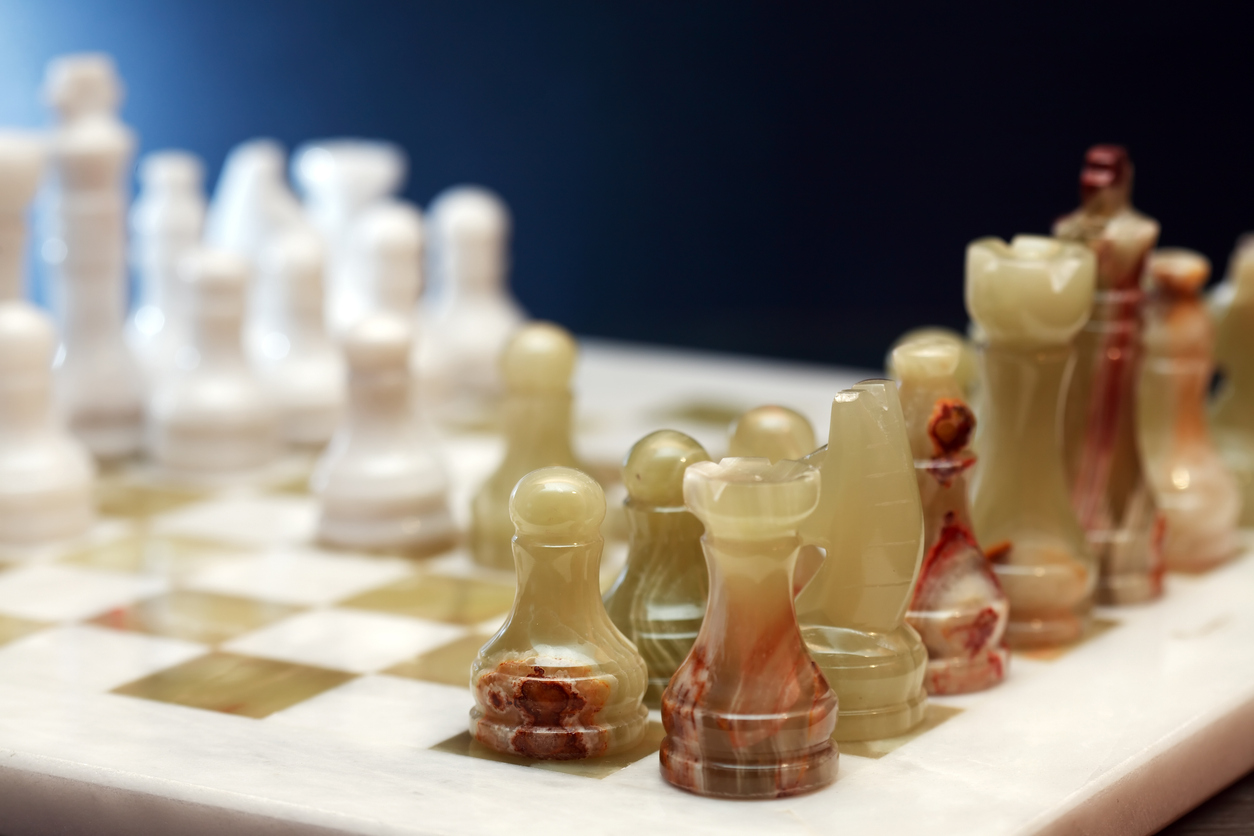
Exclusive designs: marble or onyx set
3 of 3
Beyond carved wooden boards, there are other, more intricately crafted models that are ideal for collectors, such as those made from natural stone. Marble and onyx boards possess a quality that is impossible to replicate. Unlike mass-produced sets, no two are exactly alike.
Each piece has its own unique shades and variations, thanks to the natural and distinctive veining of each stone. But beyond their beauty, these chess sets require special care, as both the weight and fragility of the stone make them more delicate.
However, compared to other models, they are an elegant choice for any enthusiast or collector wishing to add a striking chess set to their space, one that serves both as a game piece and a decorative item.