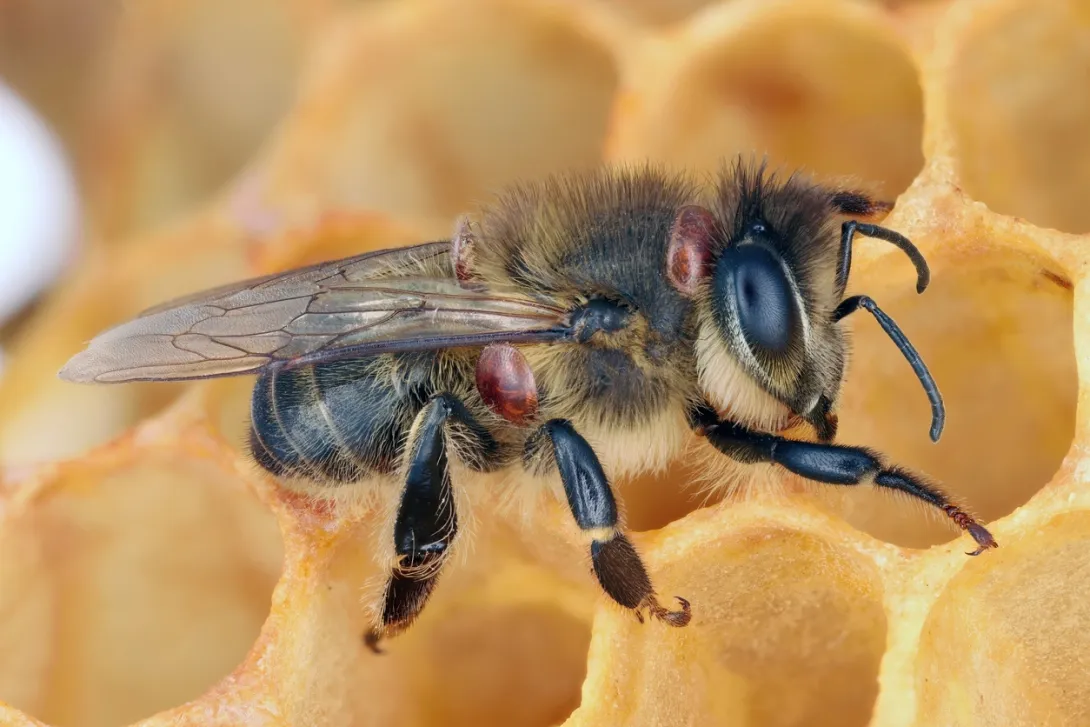
‘Varroa destructor’, the bee's enemy
Considered one of the greatest threats to beekeeping, "Varroa destructor" transmits viruses and can cause the collapse of entire colonies.
Bees play a vital role in pollination and maintaining ecosystem balance. While collecting nectar and pollen, they transport it from one flower to another, promoting the reproduction of thousands of plant species. In addition, honey bees produce honey, a natural sweetener that has accompanied humankind for centuries and is still regarded today as a high-quality food.
Over the years, bees have faced numerous threats. According to the Spanish Ministry of Agriculture, Fisheries and Food, around 10.4% of bee species found in Europe are threatened with extinction, particularly wild bees, which do not produce honey.
Habitat loss, climate change, intensive farming and the spread of invasive species account for part of this decline. Another major threat is Varroa destructor, a mite that affects the honey bee and has become one of the most significant challenges facing beekeeping in Spain and other honey-producing countries.
A global threat to beekeeping
The spread of Varroa destructor has been unstoppable since the mid-20th century. Native to Asia, this parasite evolved alongside Asian honey bees (Apis cerana), which developed natural defence mechanisms against the mite. As a result, the two species coexisted without their colonies collapsing.
Everything changed between the 1940s and 1960s, when Apis mellifera hives began to be introduced into several Asian countries to increase honey production. It was then that the mite jumped to this species, which was far more susceptible to infestation, and rapidly spread across the world's main honey-producing countries.
How Varroa destructor affects bees
This parasite attaches itself to the bodies of bees and feeds on their resources, particularly their fat body tissue. As a result, Apis mellifera bees become progressively weaker and eventually die.
During the swarming season, adult mites enter the cells containing larvae before they are sealed with wax in order to reproduce. There, they lay their eggs, and the new varroa mites develop by feeding on the growing bee.
What diseases does it transmit?
The damage caused by Varroa is not limited to the physical weakening of bees. It is also a vector of viruses that infect entire colonies. The most common viruses include:
- Deformed Wing Virus (DWV), which causes visible wing deformities and prevents bees from flying.
- Acute Bee Paralysis Virus (ABPV), associated with neurological disorders and high mortality.
- Other viruses associated with varroosis, which weaken the immune system and contribute to the progressive collapse of the colony.
Bees are essential insects for ecosystems
At present, there is no treatment capable of completely eradicating this pest. Instead, effective hive health management and the destruction of infected colonies remain the most effective control measures. The survival of bee colonies depends on regular monitoring to keep the disease under control. Ultimately, protecting bees is essential for maintaining the balance of ecosystems, preserving biodiversity and safeguarding our food supply.