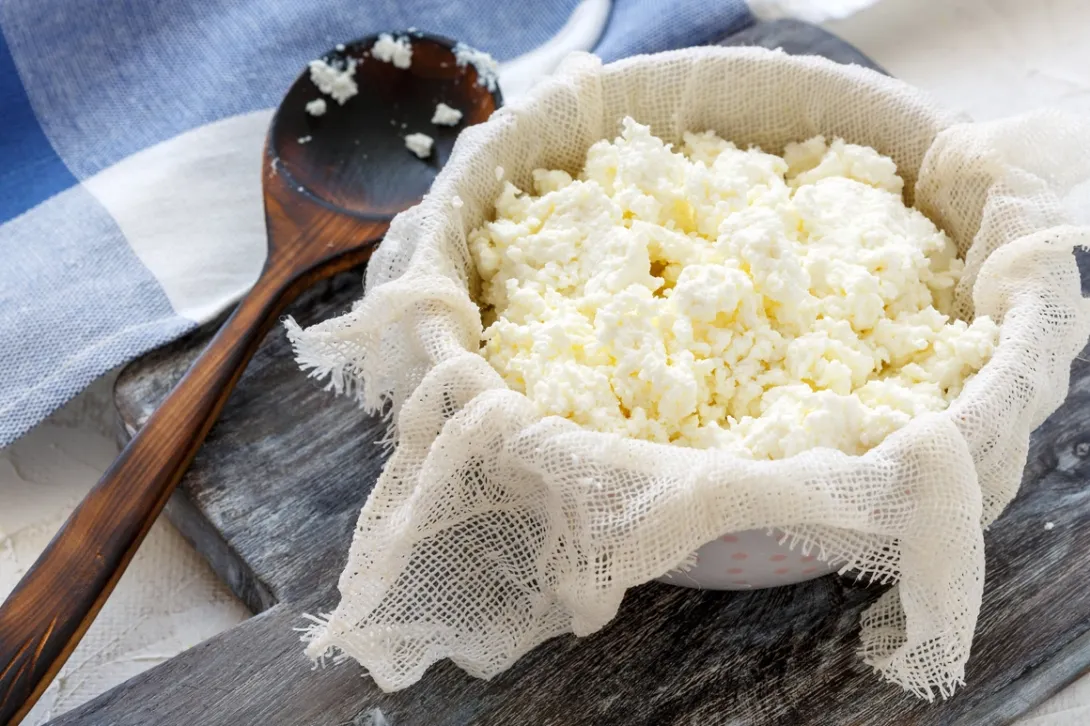
Learn how to make homemade cheese step by step
We present a simple recipe for making homemade cheese, using just a few ingredients and basic utensils that you have at home.
Homemade cheese is a traditional food of animal origin with great relevance in the mediterranean diet. Its distinctive flavour and nutritional components make it an ideal ingredient to add to salads, pasta dishes, as an appetiser or even as a main course, for example in a fondue. And although it may seem otherwise, making cheese at home is easier than it appears.
Below, we share the step-by-step recipe to prepare it using only two ingredients and in less than 20 minutes.
Nutritional value of cheese
Cheese comes from milk and retains many of its nutritional characteristics, although its final composition depends on how it is made. The less water it contains, the drier the cheese will be and the higher the concentration of nutrients. For this reason, mature cheeses provide a greater amount of protein and calcium.
Cheese is also a source of vitamins A and D, which help with calcium absorption, as well as B-group vitamins — B1, B2, B9 and B12 — the latter being essential for health and for the proper functioning of the nervous system.
Despite its nutritional benefits, cheese should be consumed in moderation, as it is high in saturated fat, particularly in the case of cheeses such as manchego, gruyère and emmental. By contrast, fresh cheeses such as cottage cheese, ricotta or mozzarella contain less fat.
Homemade fresh cheese recipe
For this recipe, instead of rennet we will use vinegar or lemon.
Ingredients:
- 1 litre of fresh whole milk (of your choice)
- 4 tablespoons of white vinegar or lemon juice
- 1 teaspoon of salt (optional)
Whey, the great forgotten by-product
When we make cheese, we separate the solid part of the milk — fat and casein — from a yellowish liquid that we often overlook and end up throwing away. This liquid is whey, the same substance that appears on the surface of yoghurt or some packaged cheeses.
Although its appearance may not be very appealing, whey is a rich source of protein. In the food industry, it is used in supplements for athletes, cosmetic products and infant formula. At home, it can also be put to good use: it is ideal for making dressings, marinating meat, baking recipes or even as fertiliser for plants. In this way, a by-product of homemade cheese with high nutritional value is fully utilised.
Not everything labelled “cheese” is actually cheese
When we go to the supermarket, we are faced with a wide range of cheeses in all kinds of formats and textures: sliced, grated, spreadable and for melting. However, not all of these products are truly cheese, even if they appear to be.
A report by the Organisation of Consumers and Users (OCU) warns that many of these seemingly healthy products are adulterated with compounds that may have a negative impact on health. These are found particularly in some manchego-style cheeses and in those labelled as “for melting”. For this reason, it is advisable to be well informed and to opt for less processed options, either by checking the label or by making cheese at home.