
How to act in case of a jellyfish sting?
Although it is uncommon, a jellyfish sting can cause cramps, respiratory difficulties and cardiac complications.
In recent years, jellyfish have become more common along Mediterranean coasts and beaches. This is due, in part, to the overfishing of fish that feed on them and to the decline of natural predators, such as sea turtles, ocean sunfish and other species. The rise in sea temperature is another contributing factor, as it extends their reproductive period and allows them to survive in areas where they previously could not.
As a result, jellyfish stings are becoming increasingly common every summer. In most cases, they only cause a painful skin reaction that lasts between one and two hours. However, in more severe cases, symptoms such as breathing difficulties or heart problems may occur, which is why it is important to know how to prevent stings and how to respond correctly if one occurs.
Why do jellyfish sting?
Jellyfish are made up of the bell or umbrella-shaped body, tentacles and oral arms. These are responsible for most stings, as they contain millions of stinging cells known as cnidocytes.
Their ability to move is very limited, so they are mainly carried by ocean currents. During the warmer months, they tend to move closer to the coast, increasing the chances of contact with swimmers and, therefore, the risk of being stung.
Be especially cautious of this species
Most jellyfish species found in the Mediterranean do not generally cause serious complications beyond a painful skin reaction that gradually subsides over time. However, in recent years, a non-native marine organism whose sting can be dangerous to humans has been spotted more frequently.
This is the Portuguese man o' war, a species that inhabits the warm and temperate waters of the Atlantic, Pacific and Indian oceans. It is easily recognised by its characteristic bluish floating bladder protruding above the surface of the water like a sail.
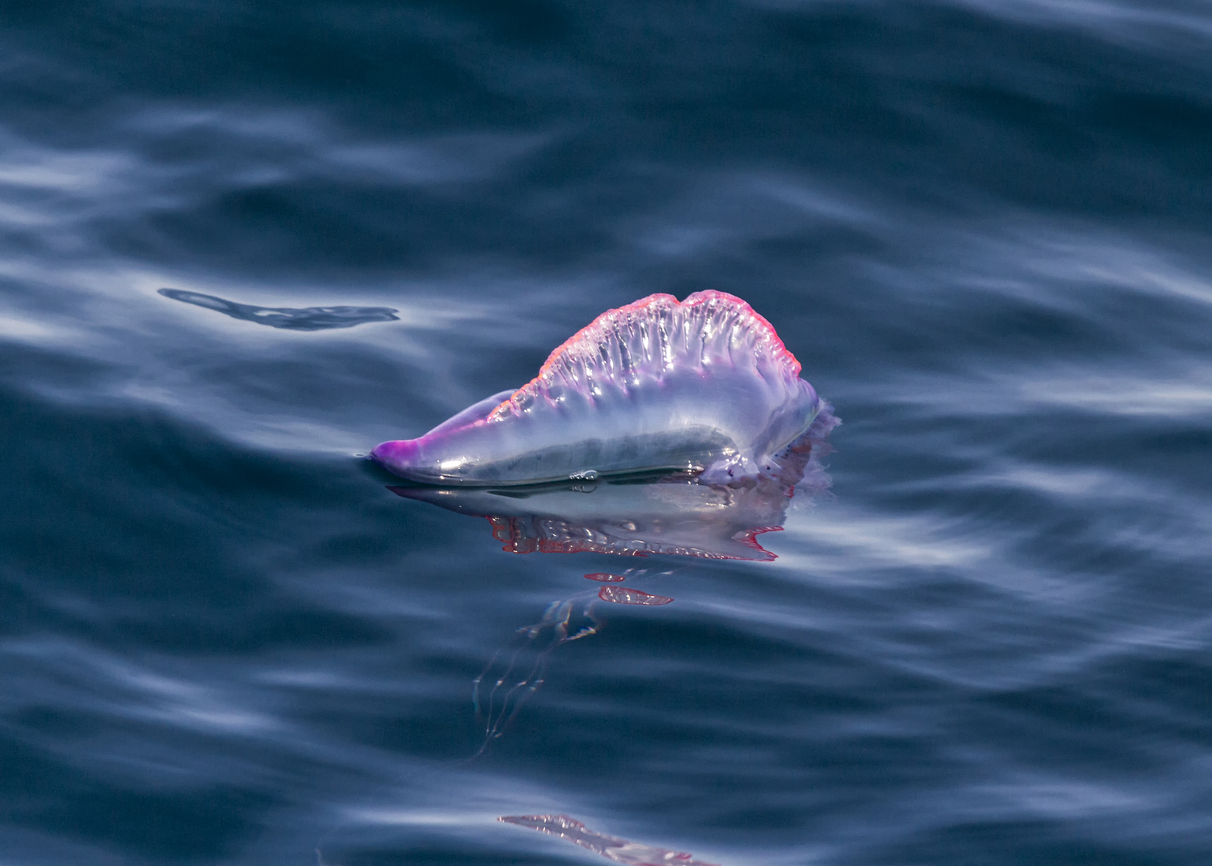 The Spanish Ministry of Health reminds the public that a jellyfish sting can occur through contact with either a live or dead organism, as well as with detached tentacle fragments. For this reason, contact with these organisms should be avoided both in the water and on the beach.
How to treat a jellyfish sting
Symptoms appear immediately after coming into contact with jellyfish venom. To help reduce pain, the Ministry of Health provides a series of recommendations:
Other recommendations for a safer summer
Most jellyfish-related incidents and stings occur through accidental contact while swimming or by handling or stepping on jellyfish on the beach. Therefore, if jellyfish are sighted in the sea, the safest option is not to swim. This helps prevent unintentional contact with these organisms or floating fragments of them.
Other useful precautions for staying safe during periods of high jellyfish abundance include:
- Avoid staying near the shoreline, as this is where jellyfish tend to accumulate due to currents.
- Remove jellyfish from the water carefully and without touching them directly, for example, by using a landing net.
- Remain cautious even if they appear far away. Currents can quickly bring them closer to shore or carry detached tentacles, which may still cause stings.
- Warn other beachgoers if jellyfish are spotted, even if they appear dead or fragmented.
If you have recently suffered a jellyfish sting, it is advisable to take extra precautions to avoid further exposure, as the body may have become sensitised, increasing the risk of an anaphylactic reaction.
Spending hot summer days at the beach is one of the season’s most enjoyable and popular activities while also offering a range of health benefits. Nevertheless, it is important to act with caution, as certain risks exist, including excessive sun exposure and jellyfish stings.
For this reason, it is advisable to adopt responsible habits, such as using sunscreen, wearing appropriate clothing and following safety recommendations. When it comes to jellyfish, it is essential to pay attention to lifeguards’ instructions and beach warning signs. If warning flags indicate the presence of jellyfish, swimmers should take extra care and follow all safety advice before entering the water.