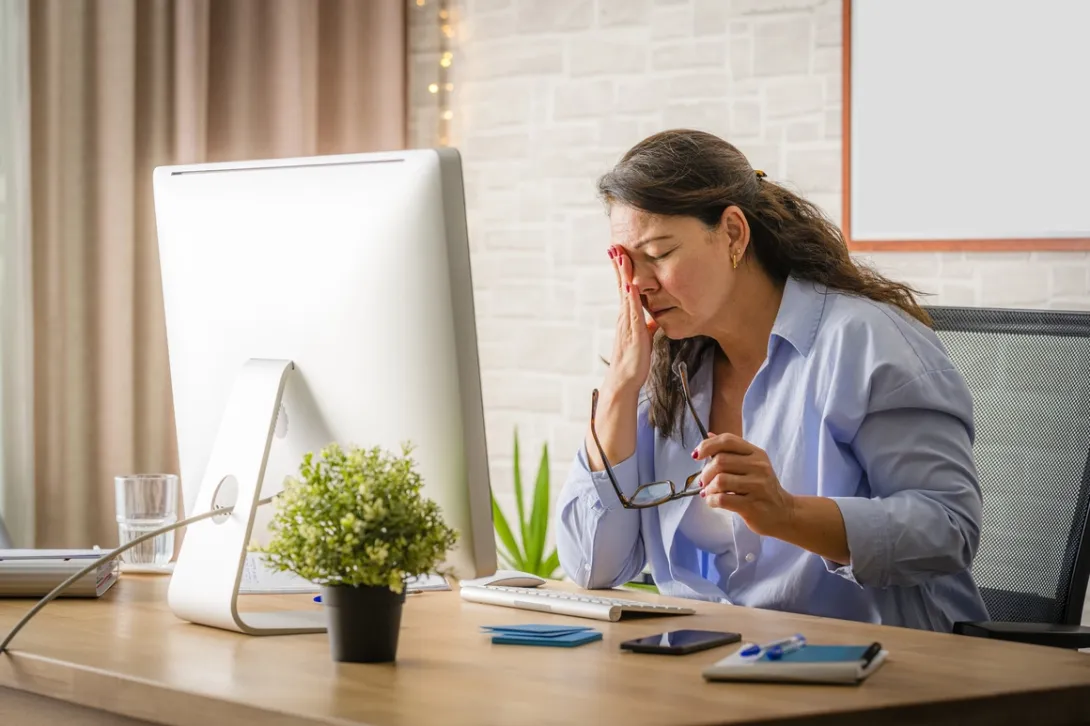
How to relieve eye strain?
The use of smartphones, computers and other electronic devices worsens the symptoms of eye strain, so it is important to learn how to look after your eyesight.
Eye strain, also known as “asthenopia” or “visual fatigue”, is a very common condition that affects millions of people. It consists of a set of symptoms that cause ocular and visual discomfort and even physicalproblems, such as headaches or migraines.
For years, this condition has been linked to long reading sessions and sustained attention. However, the contemporary lifestyle — marked by stress and the prolonged use of digital devices — has worsened eye strain.
This article explores the symptoms, the consequences of excessive screen use, and how to care for the eyes properly.
The causes and symptoms of eye strain
Eye strain occurs when we force our eyesight for hours on tasks that require a high level of concentration, such as reading or the continuous use of digital screens. In these situations, the eye muscles work excessively, blinking decreases, and the visual system ends up becoming overloaded.
In addition, there are other factors that can worsen this condition, including stress, lack of sleep, poor environmental conditions, or as a consequence of uncorrected visual problems such as myopia or astigmatism.
Symptoms
When the eyes are overloaded beyond what is advisable, discomfort typical of asthenopia commonly appears. Among the most frequent symptoms are:
- Dry, watery or itchy eyes.
- Blurred or double vision.
- A feeling of heaviness in the eyes.
- Difficulty concentrating.
- Photosensitivity or sensitivity to light.
These symptoms may be accompanied by physical discomfort, such as headaches, neck pain and muscle tension, especially in the neck and shoulders.
Although eye strain is not usually a serious condition, it can be very uncomfortable. However, symptoms can be relieved through healthy habits and by performing visual exercises that help to relax the eyes.
Eye strain and tired eyesight, are they the same?
Eye strain and tired eyesight — or presbyopia — are often used as synonyms, although they are two different conditions. The main difference lies in their permanence.
When tired eyesight is not properly corrected, it can lead to visual fatigue, as the eyes have to work harder to focus at close distances.
The effect of screens and blue light on eyesight
A large part of our day is spent looking at the screens of smartphones, televisions or computers. These devices emit blue light, a factor that is under constant study and generates a great deal of uncertainty. However, despite the theories circulating on the internet, experts agree that there is no scientific evidence proving irreversible eye damage.
Nevertheless, various studies warn that digital overexposure causes eye strain and alters the circadian rhythm. For this reason, it is important to make proper use of digital screens:
- Adjust brightness and text size to avoid straining the eyes.
- Use blue light filters or night mode.
- Avoid using screens before going to sleep so as not to disrupt sleep.
- Ensure good ambient lighting when using digital devices.
Conclusion
Eye strain is not a disease, but a condition associated with overexertion of the eyes that causes excessive fatigue of the ciliary muscles.
Proper eye care should include annual check-ups with an ophthalmologist, as this makes it possible to detect and treat potential vision problems early. In addition, maintaining healthy habits, as well as a good diet and responsible use of screens, helps to reduce discomfort. The key to combating eye strain is prevention.