How to cook salmon perfectly, according to experts
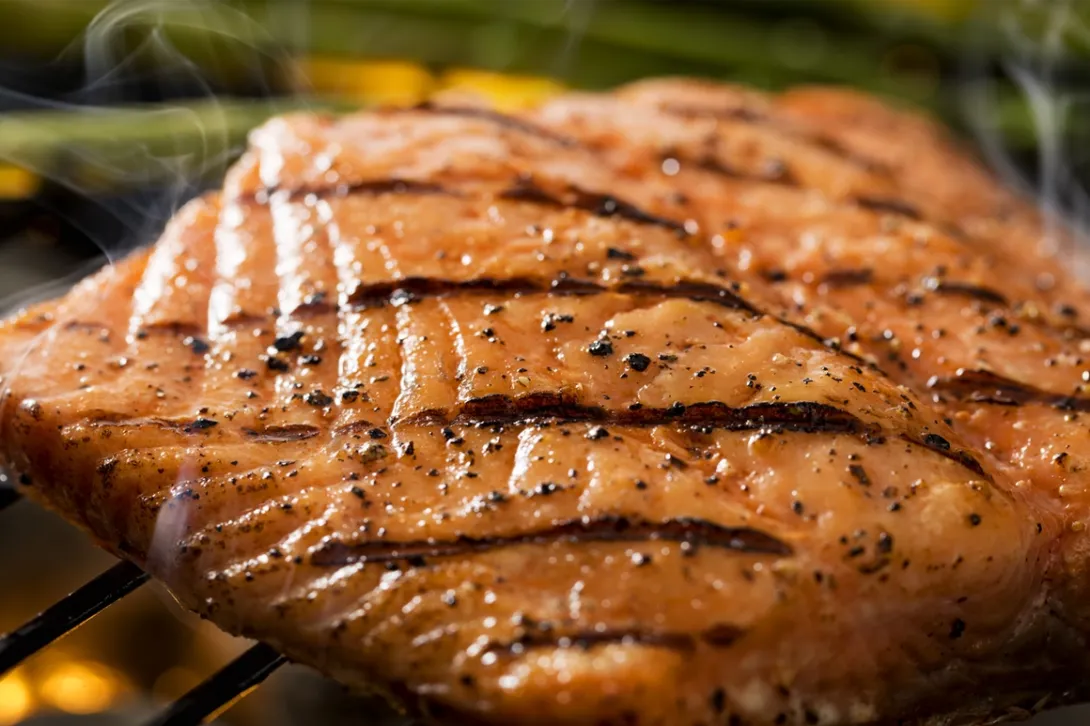
Discover how to cook salmon to perfection and achieve that perfectly crispy exterior and succulent interior.
Salmon is an oily fish, highly prized for its texture and delicious flavour. It is a very versatile ingredient that can be enjoyed in many different ways: smoked, raw, marinated, baked or pan-fried.
The most common way to cook salmon is in a frying pan, although it is also one of the trickiest methods, as it can easily become too dry or fall apart during cooking. Below, we share some professional chefs' tips to help you learn how to cook salmon so that it is crispy on the outside and tender on the inside.
Nutritional value of salmon
Salmon is an excellent source of protein as well as healthy fats. In fact, it contains around 12 grams of fat per 100 g of edible portion, a similar amount to that found in tuna. It is also rich in monounsaturated fatty acids and omega-3 fatty acids, often referred to as "healthy fats", which help regulate cholesterol levels and support cardiovascular health.
Unlike other large oily fish species, salmon has a low mercury content, making it safe to consume in moderation. It also provides vitamins D and E as well as several B vitamins, including B6, B12, thiamine and niacin.
The Spanish Agency for Food Safety and Nutrition (AESAN) recommends eating at least three portions of fish per week, alternating between white and oily fish while limiting the consumption of species with a high mercury content.
With this in mind, we're sharing a versatile pan-fried salmon recipe that is both versatile and easy to include in your diet.
How to cook salmon: expert tips
Excess moisture on the fish is one of the main reasons why salmon sticks to the pan during cooking. Ideally, you should leave the fish in the fridge for 30 to 40 minutes, with the skin resting on kitchen paper so that it dries properly. If you are short on time, simply pat it dry thoroughly with kitchen paper and season generously with salt and pepper on both sides.
Another key factor is the temperature of the pan. It should be very hot before adding the fish and, once the salmon is in the pan, it is advisable to reduce the heat slightly so that it cooks evenly without burning. This makes it much easier to achieve perfectly juicy pan-fried salmon.
Professional chefs use a simple trick to check whether the pan has reached the right temperature. Just add a few drops of water. If they glide across the surface, forming small beads before evaporating, the pan is ready to cook the salmon.
By following these tips, you'll find it much easier to cook pan-fried salmon with a crispy exterior and a juicy interior.
Pan-fried salmon recipe
Ingredients
- 1 salmon fillet (approximately 200 g)
- Salt and pepper to taste
- Extra virgin olive oil
- Frying pan
- Butter (optional)
- Fresh herbs (optional)
The best sauces for salmon
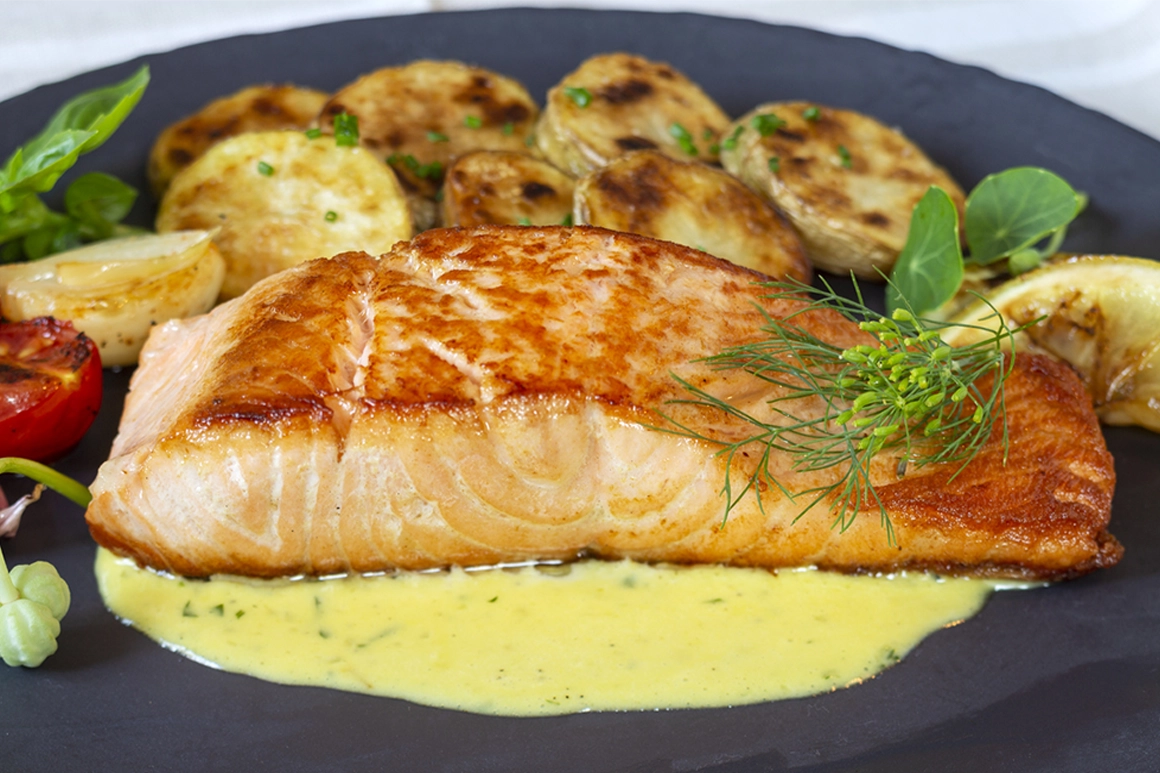
The best sauces for salmon
1 of 1
The sauces can be added once the salmon has been cooked or used as a marinade for around 30 minutes to enhance its flavour. Here are some combinations that work particularly well:
- Olive oil, soy sauce and one tablespoon of honey.
- Yoghurt sauce made with two tablespoons of natural yoghurt, dill and lemon juice.
- Butter, garlic and lemon juice.