Wasp or bee sting? Know the differences
Identifying whether it is a wasp or bee sting allows you to respond appropriately and recognise a potential allergic reaction early.
A wasp or bee sting is common during the summer and, although it usually causes a mild reaction, in some cases it can trigger an allergic reaction and require medical attention. The pain is immediate and can be intense, although it generally subsides after a few hours.
At first glance, it is not always easy to distinguish between the two types of sting or identify the insect responsible. Wasps and bees have a similar appearance, and both inject venom when they insert their sting. As a result, many people assume that both types of sting should be treated in the same way, although each requires different care.
How do bees and wasps sting?
Both insects use their sting as a defence mechanism when they feel threatened. Bees usually sting when they are attacked or when someone gets too close to their hive. When they do so, their barbed sting becomes lodged in the skin. As they try to fly away, they lose part of their abdomen and die shortly afterwards, which means that they can only sting once.
Wasps, by contrast, do not usually lose their sting, allowing them to survive and attack again. A single wasp can therefore inflict several stings in succession. These insects are also frequently attracted to food and drinks, particularly when they are consumed outdoors, increasing the likelihood of encountering them during the summer.
Differences between a wasp or bee sting and its symptoms
Although both types of sting cause similar discomfort, bee and wasp venoms have a different composition. According to a scientific article published in the journal Biomedicines, each contains different allergenic components that can trigger reactions of varying intensity, depending on the person’s sensitivity.
Bee venom contains components such as melittin and phospholipase A2, which are associated with the pain and inflammatory reaction that occur after a sting. Wasp venom contains other substances, including phospholipase A1 and antigen 5, one of its main allergens. Its composition can make the burning and stinging sensations more intense.
Symptoms
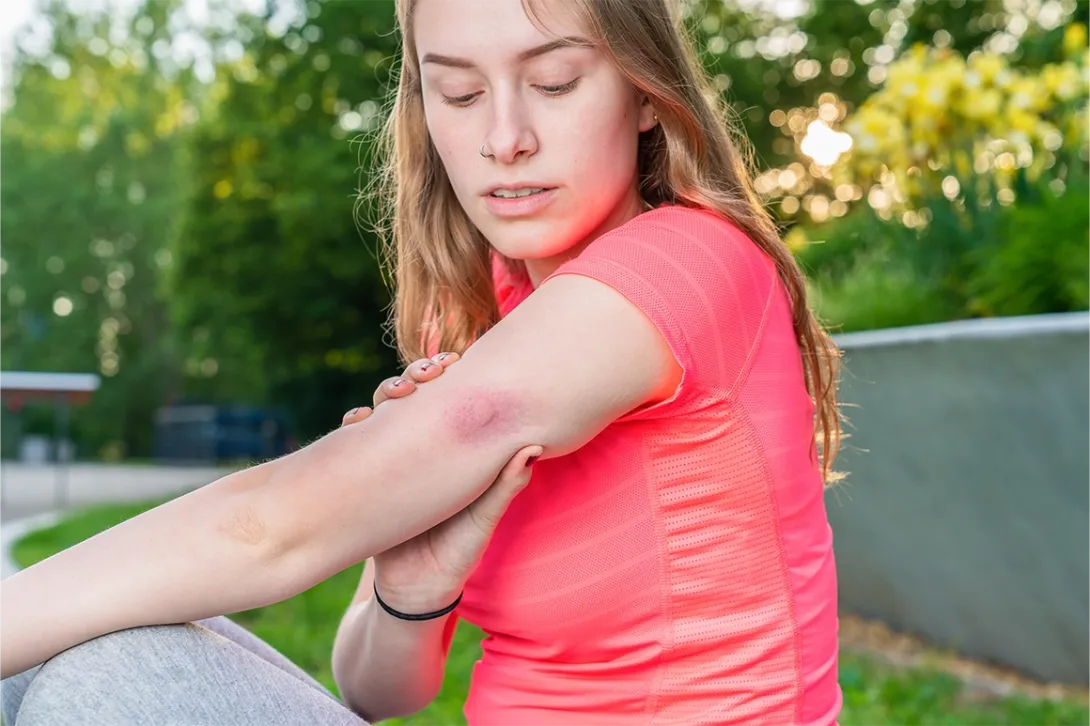
In the case of wasp stings, the symptoms are very similar: localised pain, itching, swelling and a small, warm welt. The main difference is that the sting does not usually remain in the skin, and several marks may appear if the insect has stung more than once. The discomfort generally subsides after a few hours, although the swelling can last for several days.
How should you treat a wasp or bee sting?
After a bee sting, the first step is to check whether the sting remains lodged in the skin and remove it carefully as soon as possible, without pressing the venom sac. Once it has been removed, wash the area with soap and water and apply a cold compress to relieve the pain and reduce the swelling.
Wasps do not usually leave their sting behind, so it is normally enough to clean the skin and apply a cold compress for several minutes. If the itching or swelling is severe, a healthcare professional may recommend antihistamines, painkillers or a topical treatment. Avoid scratching the affected area, as this can irritate the skin and increase the risk of infection.
Knowing how to distinguish a wasp or bee sting can help you provide the appropriate first aid, although the most important thing is to monitor the body’s reaction. Symptoms such as widespread hives, difficulty breathing or swelling of the tongue or throat may indicate anaphylaxis. If any of these symptoms occur, seek immediate medical attention.