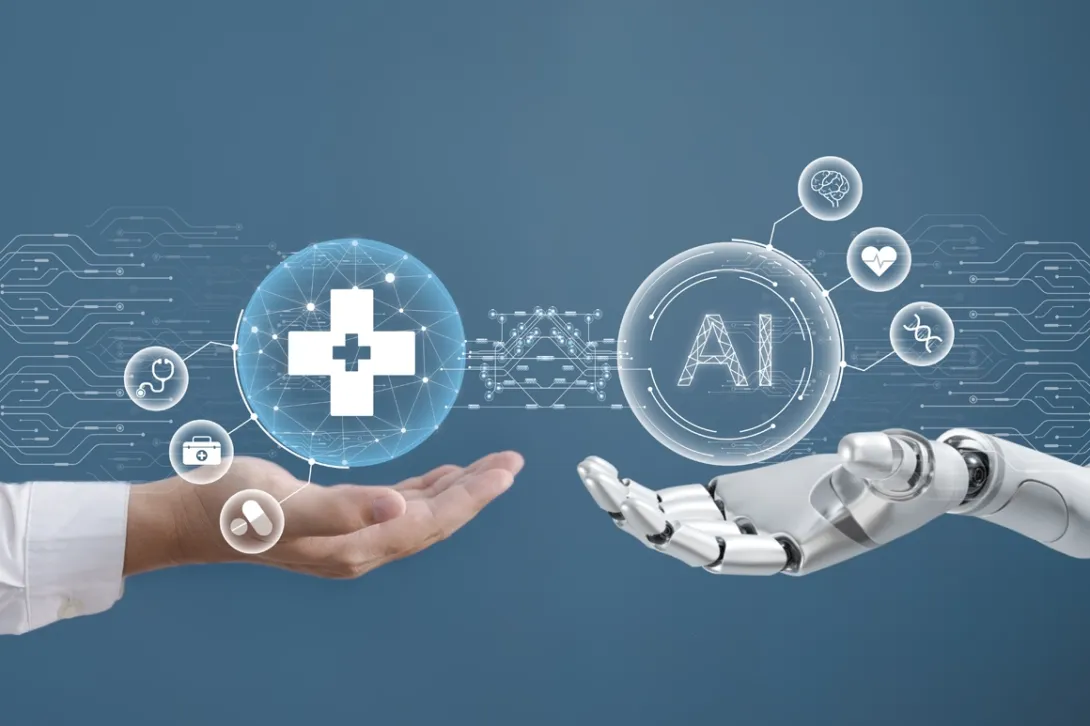
The benefits of using AI in research and healthcare
Digital transformation has been a watershed moment in medicine, as it allows more information to be obtained, increased speed and precision in the execution of tasks and contributes to the determination of diagnoses or the assignment of treatments.
The alliance between medicine and engineering is essential to obtain results that are useful for research. "Doctors have been involved in technological processes so that models can be developed meeting our needs," explains Dr. Concepción Gómez Gavara.
This researcher began training Artificial Intelligence models with patient data as early as 2018. Since then, she has been able to see, once and again, the enormous usefulness of resorting to this type of tool to improve medical praxis. We discussed some of the main advantages offered by the application of AI in research and patient care with her.
Speed
"Artificial intelligence makes it possible to speed up many processes. Work that used to be done in a year, can now be done in about three months."
Accuracy
"When doctors evaluate livers, we have a success rate of approximately 50%. Often, out of prudence, we used to discard organs that were actually suitable for transplantation. The AI model, on the other hand, achieves a much higher accuracy, around 85%. Currently, we are still working so that it can reach 90 or 95% effectiveness."
Objectivity
"We doctors who consider ourselves innovators believe in continuous improvement. For us, technology must support more informed decision-making, thanks to the 3D vision that robots provide."
Improved vision
"In fluorescence research, AI is able to distinguish much better what is a tumour and what is not. Thanks to this, we are managing to reduce the margins of tumour acceptance (the edge of apparently healthy tissue that the surgeon removes so that there are no tumour cells in the area) to approximately half".
Learning
"The new generations want faster answers. In my formative days, we could forgo sleep during a shift to learn from a case that had arisen. Now, we've created new ways of training for future doctors. AI allows gamification strategies to be created, such as a video game to review from home. We must also be able to train the AI models to offer us fast and accurate answers based on the criteria that we have set for them."
Communicating with patients
"AI also facilitates communication and the transmission of knowledge to patients, who should always stay at the centre of the equation. Trained models allow us to translate into understandable language the explanations we must give about a procedure we are going to perform, for example. At the same time, the fact that it can free us from more routine tasks helps us to use this time to provide a higher standard of care."