The K-pop formula: what explains its global success?
We take a look at the origins and international expansion of this genre, which has already captivated an entire generation of young people.
In just a few decades, K-pop has gone from being a musical genre that emerged in South Korea to becoming a global phenomenon, featuring at major international events, from the Grammy Awards to the Coachella festival.
It is difficult to come up with a precise definition of what K-pop is. It is a musical genre which, although it has its origins in 1990s Korea, during a period of political and cultural transition, has little in common with the country’s traditional music. Nor can it be regarded as a mere adaptation of Western pop, but rather a hybrid style that draws on international genres such as hip-hop, rock, experimental pop, rap and electronic music.
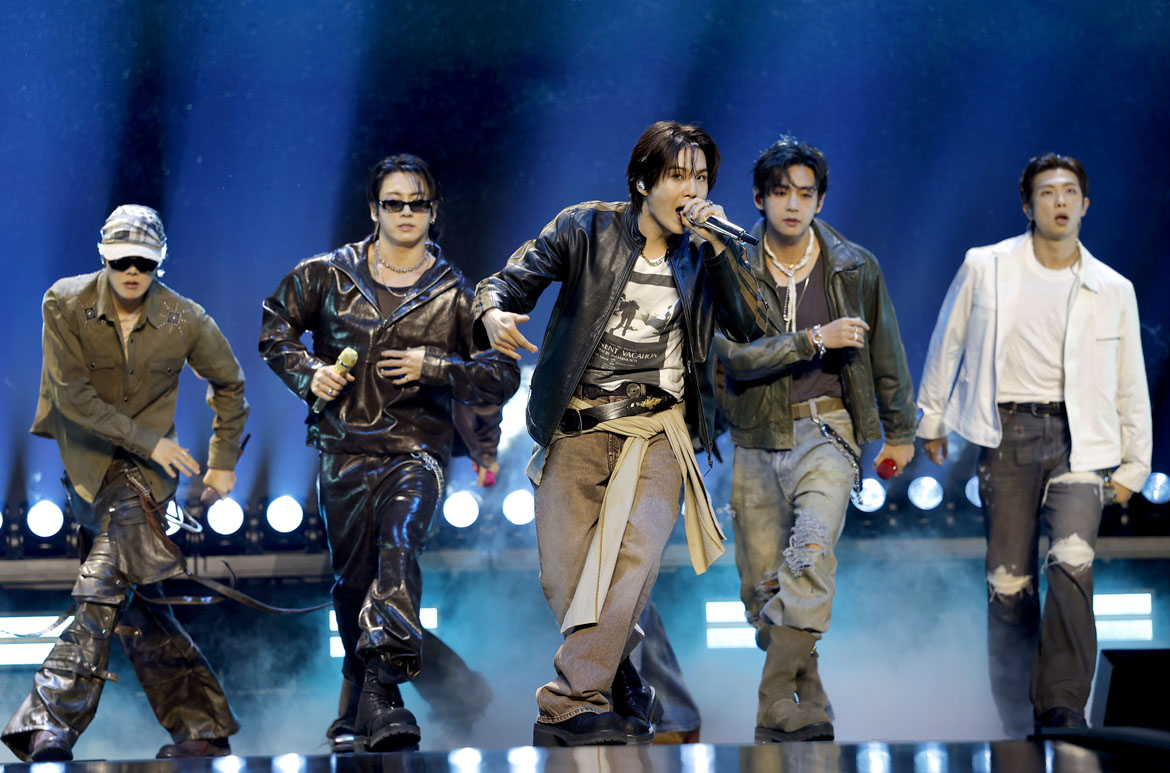
Its catchy rhythms, meticulous visual aesthetic and precisely choreographed routines have captivated international audiences and turned South Korean music into a global cultural phenomenon. With BTS and BLACKPINK at the forefront, idol groups have achieved worldwide fame, although the foundations of this musical movement were first laid over thirty years ago.
But what is behind this K-pop craze that is attracting so much admiration?
The Hallyu Wave
Some date the turning point that laid the foundations of modern K-pop to 1992. It was then that Seo Taiji and Boys burst onto the music scene with I Know, a song that, for the first time, fused rap, dance and Western rhythms with lyrics that challenged the social conventions and censorship rules of the time.
Initially, this approach was not well received by conservative sectors of society, although it generated great excitement among a generation of young people seeking bolder sounds and alternatives to traditional music.
International expansion came with the so-called Hallyu Wave, a cultural movement that began to gain momentum in the late 1990s and early 2000s.
South Korean music, television series, cinema and other cultural expressions began to attract audiences around the world, although K-pop would still take some time to firmly establish itself in the international market.
From Gangnam Style to Dynamite
At the beginning of the century, new groups quickly emerged that today form part of the second generation of K-pop. Among the most prominent are BIGBANG, Girls’ Generation, Super Junior and SHINee.
However, one of the major turning points in the international rise of this musical movement came in 2012 with the phenomenon of Gangnam Style by PSY. The song satirised the affluent lifestyle of Seoul’s Gangnam district, although its global success was largely due to its infectious rhythm, light-hearted character and a quirky, easy-to-copy dance routine. In fact, the music video has now surpassed six billion views on YouTube, fourteen years after its release.
Over the following years, increasingly professionalised male and female groups emerged. But in 2013, Big Hit Entertainment introduced a new boy band made up of seven young men under the name BTS, which would go on to become a global K-pop icon with songs such as Dynamite.
The Keys to K-pop’s Global Success
The success of South Korean music is no accident. Behind it lies a powerful industry that has spent years studying consumer trends and audience preferences on a global scale. For this reason, some regard K-pop as a deliberately universal, mass-market product; others, however, defend it as a distinct cultural expression, the result of the evolution and fusion of different musical traditions.
But if there is one thing that defines this movement, it is its ability to offer an entertainment experience that goes far beyond music. The songs incorporate rap verses and English-language passages to facilitate their international reach, as in Butter by BTS or Bet You Wanna by BLACKPINK.
Added to this are meticulously crafted narratives, lavishly produced music videos, synchronised choreography and appearances on television programmes and digital platforms. All of this forms part of a strategy aimed at forging a connection with the audience and building loyalty, what is commonly known as a fandom.
Furthermore, the growing interest in Korean TV series and films, such as Squid Game and K-Pop Demon Hunters, has brought the country’s music to a wider audience, whilst also boosting the popularity of songs such as Golden and covers of the traditional children’s song Round and Round.
Social Media as a Catalyst for the Genre
In a culture nourished by hyperconnectivity, going viral is no coincidence, but rather an opportunity that the K-pop industry has skilfully capitalised on.
This was the case with the song APT. by Rosé, a member of BLACKPINK, and Bruno Mars, which quickly gained popularity thanks to its catchy chorus and the dance challenge that went viral on social media. Something similar happened with Cupid by Fifty Fifty, whose English-language version helped it become a trend on social media.
In recent years, the expansion and international recognition of K-pop have also fostered collaborations, both group and solo, with major figures in the international music scene. This is the case with My Universe by BTS and Coldplay, which managed to reach the top of the charts thanks to the collaboration with the London-based band.
Among other well-known artists who have collaborated with Korean bands, we also find prominent figures from the Latin American music scene. Sebastián Yatra featured alongside MONSTA X on Magnetic. Meanwhile, Becky G collaborated with J-Hope, a member of BTS, on Chicken Noodle Soup, alongside many other artists who have helped to strengthen the ties between K-pop and the global music industry.