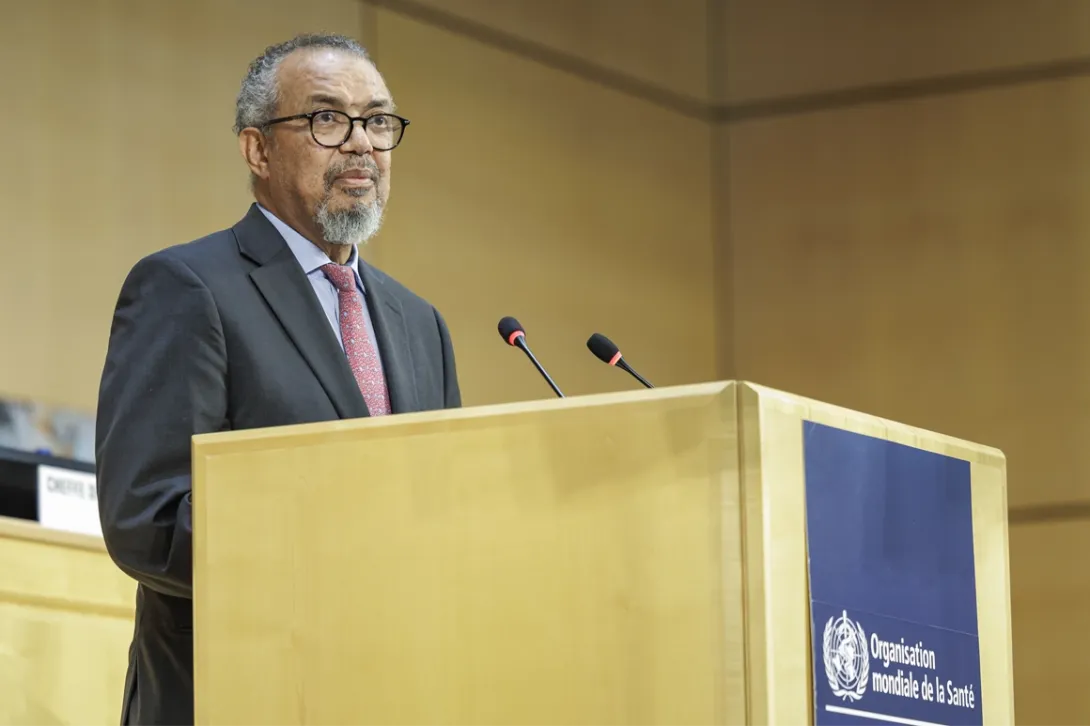
79th World Health Assembly
WHO countries reach agreements to strengthen global health, drive medical innovation and improve responses to health emergencies.
Against an international backdrop marked by geopolitical fragmentation, the 79th World Health Assembly was held in Geneva last May. This annual meeting of the Member States of the World Health Organisation (WHO) went beyond a purely bureaucratic exercise to directly address the most pressing challenges facing global health, highlighting the need to protect and fund global public goods.
In light of the crisis of funding and legitimacy currently faced by global health multilateralism, “it is time to move beyond the era of donor dependency and embrace a new era of health sovereignty,” said Tedros Adhanom Ghebreyesus, Director-General of the WHO, at the start of the assembly. The agenda for the sessions was dominated by the Ebola outbreak in the Republic of the Congo and Uganda, an event that highlighted the vulnerability of cross-border health networks. Despite political differences between blocs of countries, the delegations managed to reach a significant consensus and concluded the meeting with the adoption of 20 decisions and 13 strategic resolutions aimed at strengthening health systems.
A new healthcare investment project
The main highlight of the assembly was the adoption of the Strategy on the Economics of Health for All (2026–2030). This measure aims to reshape international financial policies so that investment in health is no longer viewed as a current expenditure but is established as the cornerstone of sustainable development. The aim is for global markets to begin operating in accordance with equity criteria, progressively transforming current development models. In the clinical sphere, the plenary made progress in two areas of great importance.
On the one hand, the first global resolution on stroke was adopted, establishing a comprehensive roadmap to improve the prevention, acute medical care and subsequent rehabilitation for patients. On the other hand, the green light was given to a resolution on precision medicine, designed specifically to ensure that personalised treatments and the latest biotechnological advances are not restricted only to the richest nations.
Finally, digitalisation and the ability to respond immediately took centre stage in the discussions during the closing sessions. Member States adopted the Global Strategy for Emergency, Critical and Operative Care (ECO) 2026–2035. This plan aims to ensure timely and coordinated medical services in critical situations, whilst strengthening pharmacovigilance mechanisms worldwide.