Benefits of oily fish in the diet
It has been found that frequent consumption of oily fish may reduce the risk of developing Alzheimer’s disease and help relieve menstrual pain.
Oily fish is an essential food for maintaining a balanced diet. It is a source of energy, protein and other nutrients. In addition, in many cultures it forms the basis of cuisine, such as in the Mediterranean, Nordic and Asian diets, especially the Japanese one.
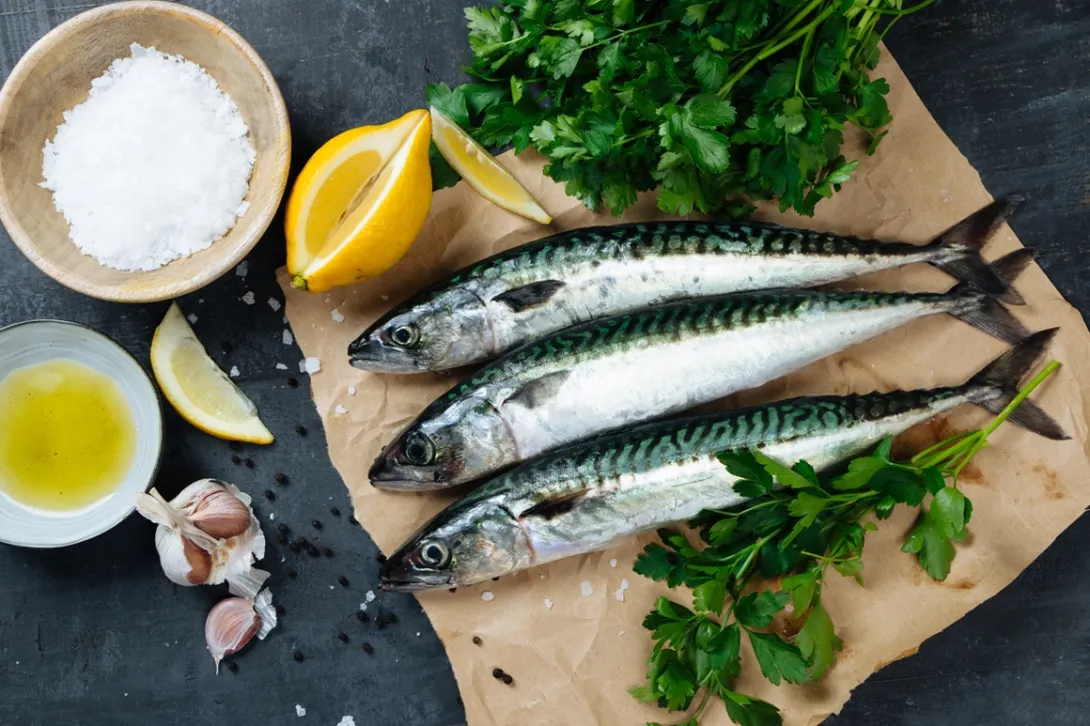
Examples of oily fish include salmon, tuna, sardines, anchovies, mackerel and eel. However, in recent years, its consumption has been the subject of various controversies. Specifically due to its high fat content and ocean pollution, as many species contain certain levels of metals.
What is the difference between oily and white fish?
There are two main categories of fish: oily and white. Both share many similarities in appearance, although they differ in taste and nutritional composition.
The main distinction between them is the amount of fat. Oily fish contains more than 5%, whereas white fish does not exceed 2%. However, this difference is mainly noticeable when eaten, so to tell them apart at the market, it is important to look at certain physical features. In particular, the tail: oily fish have a curved tail, whereas white fish have a completely straight one.
An ally against Alzheimer’s and menstrual pain
Recent research has highlighted that consuming oily fish may also benefit brain health. The study shows that a higher intake of DHA—a type of omega-3—is associated with better preservation of brain structure and a lower presence of vascular lesions in people at risk of developing Alzheimer’s disease.
In addition, another study carried out at Kinki University in Osaka, Japan, found that fish consumption may be linked to relief from premenstrual symptoms in athletes, as omega-3 could help improve wellbeing and performance during the menstrual cycle.
Mercury, the main risk of fish consumption
Despite being recommended by experts, excessive consumption of oily fish carries health risks. This is due to the presence of high levels of mercury in its flesh as a result of ocean pollution. This component tends to accumulate in larger, fattier fish such as swordfish, bluefin tuna, shark and pike.
Mercury can affect the developing central nervous system, both through direct and indirect food consumption. This metal can cross the placenta and may also accumulate in breast milk. For this reason, the Spanish Agency for Food Safety and Nutrition (AESAN) recommends moderating the intake of these fish among children aged 0 to 14, as well as pregnant women.
This is the ideal amount of fish per week
Oily fish fits perfectly into a balanced diet, as it provides high-quality protein, healthy fats and a wide range of essential vitamins and minerals. AESAN recommends consuming 3 to 4 portions of fish per week.
In addition, it is a highly versatile ingredient that can be cooked in many different ways and easily adapted to all kinds of recipes—from simple preparations such as grilled or baked dishes to more elaborate ones—making it easy to include regularly in a daily diet.