
Why do cold sores appear?
Most HSV infections are asymptomatic or go unnoticed, but painful blisters may also appear from time to time. In summer, there are several factors that can make such cold sores more likely or make them worse due to exposure to the sun.
It is estimated that 64% of people under the age of 50 are infected with herpes simplex virus type 1 (HSV-1), the main cause of cold sores, according to the World Health Organisation. Most of these people, despite being infected, are asymptomatic. This is because HSV-1 has a very distinctive characteristic: after the initial infection, it doesn't disappear from the body, but instead ‘hides’ within certain nerve cells. The immune system keeps it in a dormant state from then on, and it does not produce any symptoms.
HSV-1 infection is usually spread through skin-to-skin contact during childhood, when a child comes into contact with someone who already has the virus. It can be treated, but there is no cure; under certain circumstances, the virus can reactivate, travel back to the skin or lips and cause what we know as "cold sores" or oral herpes.
The frequency with which this recurrence occurs varies greatly. Some people experience it for a few years and then never have any further symptoms, while others endure it regularly. Because it is highly contagious, it is important not to confuse this viral infection with canker sores, which usually appear on the inside of the lip or in the mouth. Although they may look similar, canker sores are not contagious, whereas HSV is.
Herpes and the sun: a bad combination
Summer brings together several of the key factors that can trigger a herpes simplex outbreak: changes in work and rest patterns due to the intensity of summer sunlight often alter our immune systems. Added to this are dehydration and prolonged swimming in the sea, which dry out the oral mucosa, as well as changes in diet, which may include foods rich in arginine.
The most dangerous factor, however, is the sun. Ultraviolet (UV) radiation acts as one of the main triggers for the virus. To prevent its potential effects, it is necessary to apply lip balms with an SPF rating of 30 or higher and sunscreen before going out in the sun.
Recurrences of photo-induced cold sores can be prevented in around 90% of patients through a combination of sunscreen and prophylactic antiviral treatment, according to a study published in The Lancet; this is therefore the most reliable way to prevent them from occurring.
What should you do when you get a cold sore?
The best way to treat a cold sore is to tackle it before it breaks out. This involves two things: firstly, being on the lookout for possible symptoms if your immune system is weakened (due to a fever, your period, emotional stress or surgery); some possible early symptoms include a tingling sensation, pain and itching on or around the lips.
Secondly, make sure you have the right medicines to hand so that you can use them at the first sign of a cold sore. Topical antiviral medicines used to treat cold sores are often used to reduce their duration and severity, the most common being Aciclovir. Treatment of recurrent episodes will be more effective if started within 48 hours of the onset of symptoms.
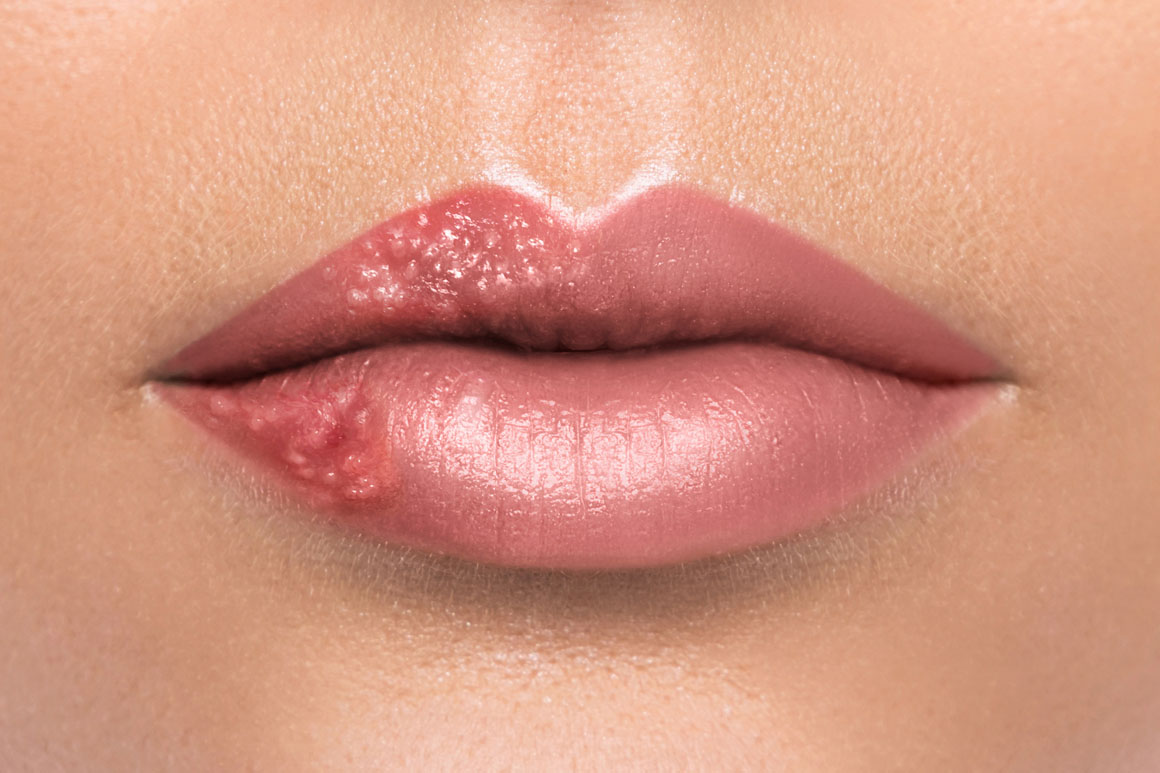
In any case, it is essential to use a solution recommended by a professional, as there are some ‘home-made remedies’ that not only fail to stop the virus from spreading but can also cause allergies and irritation, such as applying alcohol, toothpaste or lemon juice.
Finally, it is important to be aware of the virus’s lifecycle during an outbreak to avoid infecting those around us. HSV-1 has five stages of development, all of which are contagious. The first few days after a sore appears are when the risk of transmission is highest, but even once the sores have dried out and formed scabs, if the scab cracks and fluid leaks out, the virus can still be transmitted.
Watch out for these other parts of your body!
Herpes simplex can appear on almost any part of the skin or mucous membranes, although outbreaks are most common around the mouth. As the viral transmission involves contact with skin, it can spread or take hold in other areas and appear in any of the following locations: