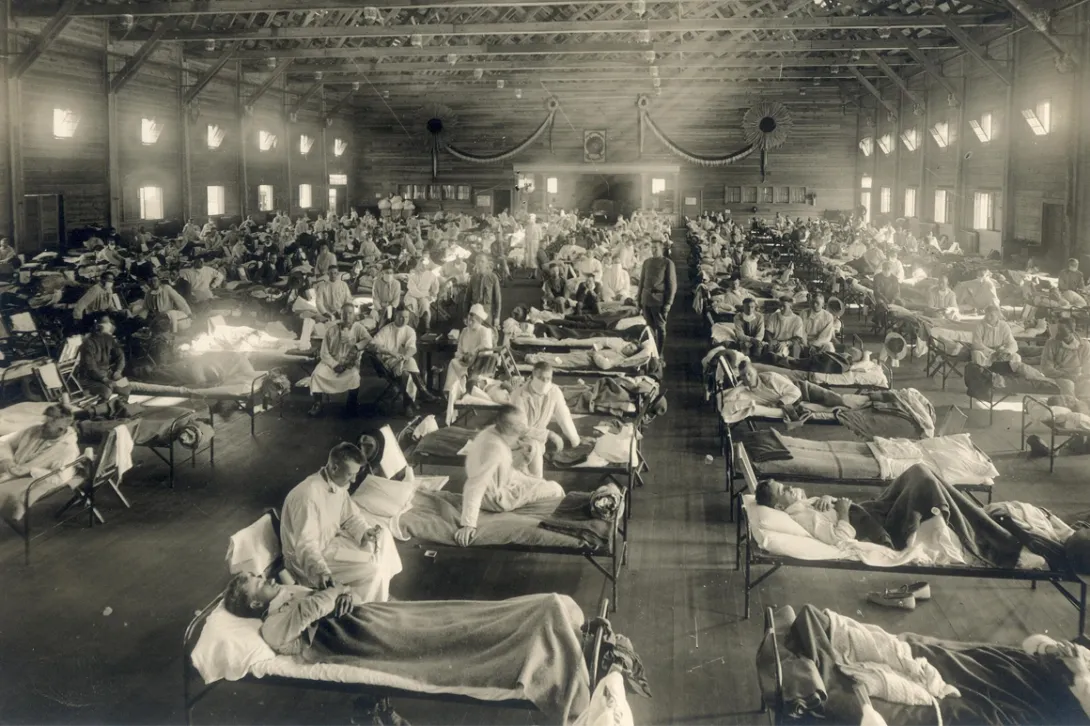
Did you know that….? After the Black death, the Spanish flu was the deadliest pandemic ever
It is estimated that the Spanish flu claimed between 50 and 100 million lives due to its spread during the First World War.
Throughout history, few forces have shaped human demography and society as brutally as epidemics. The most terrifying example is still the black death (1347-1351), which in just four years, wiped an estimate of between 30% and 60% of the European population off the map, reshaping the medieval world.
However, many centuries later, in the twentieth century, humanity faced up to a microscopic murderer that was almost as efficient: the misnamed Spanish flu of 1918. Ironically, the flu did not start off in Spain; it merged in the last months of the First World War – with the debate revolving around whether it originated in a military camp in U.S.A or in France – but it was the Spanish press which, free from military censorship, openly informed about the disease that was decimating the population and even affecting King Alfonso XIII.
The inevitable spreading
This strain of the flu virus (H1N1) was unique and terrifying. Unlike the common flu, which mainly affects children and the elderly, the 1918 strain virulently attacked healthy young people (aged between 20 and 40 years). The virus caused a “storm of cytokines”, an over-reaction of the immune system that made the lungs fill up with liquid, leading to a devastating pneumonia and death by asphyxia in a question of days, or even hours.
The war was its best ally. The mass movement of troops on ships and trains all over the world spread the virus at breakneck speed. In approximately two years (1918-1920), in three deadly waves, it infected a third of the world population (around 500 million people). It is estimated that it killed between 50 and 100 million people all over the planet, greatly exceeding the total deaths from the First World War.
Without any vaccines or antibiotics to treat the secondary pneumonias, the only defence was isolation, gauze face masks and quarantine. The pandemic finally disappeared: the virus mutated to less lethal strains and the immunity of the survivors curbed its advance.
Although today we have annual vaccines and antiviral drugs, flu has not disappeared. The World Health Organisation (WHO) estimates that seasonal flu continues to cause between 290,000 and 650,000 respiratory deaths every year around the world. The lessons learnt from 1918 are the foundations for modern epidemiological monitoring, a reminder of the speed with which a respiratory virus can bring the planet to a standstill.