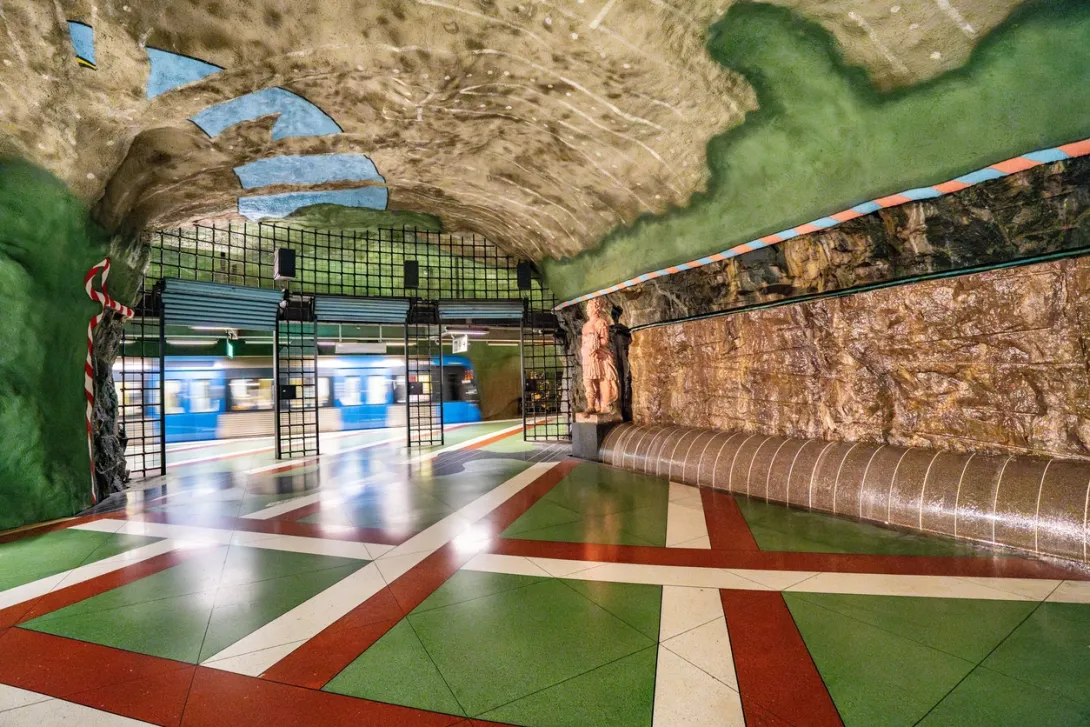
Metro stations that look like works of art
Across Europe, there are metro stations that resemble works of art straight out of a museum. Here are six of them that are well worth visiting.
When visiting a city, it is normal for our list to include historic monuments, major museums, or iconic restaurants. But why not also include some metro stations? Beyond their functionality, in Europe there are metro stations that look like authentic works of art.
The first metro system was born in 1863
In 1843, the politician and visionary Charles Pearson proposed the construction of underground tunnels to improve traffic in the streets of London. Almost 20 years later, in 1860, the British Parliament authorised the construction of the Metropolitan Railway, which opened in 1863 amid the urban revolution and became a revolutionary example for Europe. Nevertheless, at that time, the concept of the modern metro was still far from realised.
London was the first city to use steam trains to travel underground, and it was a complete success. Five years later, the railway company opened a second transport line. London was soon followed by other cities such as Glasgow, Paris, Madrid, and American cities like Boston and New York. However, the first fully electrified metro was in the Hungarian capital, inaugurated in 1896.
Today, metro stations are places of transit and waiting, of farewells and welcomes, of departures and end points. Every day, thousands of people walk through their corridors and platforms to travel from one point to another in the city. Over time, they have also reflected the economic and social development of the cities.
Yet, on many occasions, their architecture and design hide a rich artistic and historical heritage, reflecting the style of the city. Simply look up to discover authentic architectural gems hidden beneath the streets.
6 estaciones de metro europeas que parecen obras de arte
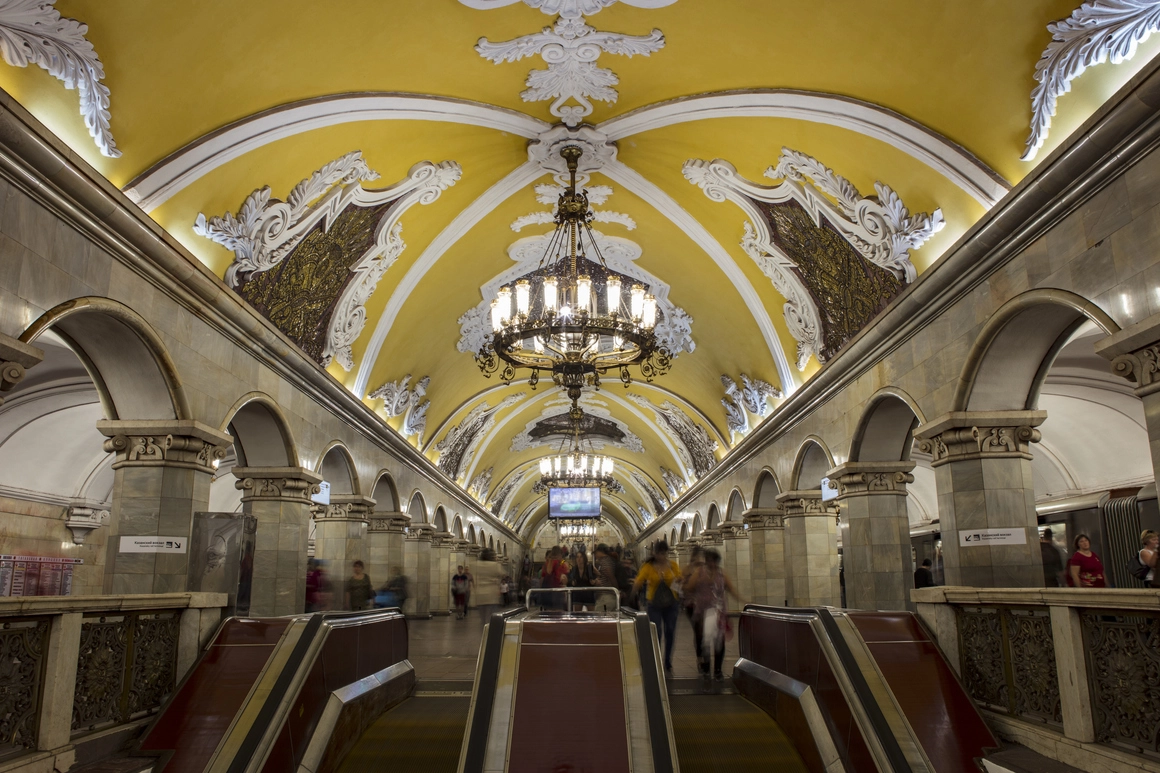
Komsomólskaya station, Russia
1 of 6
The Moscow Metro was opened in 1935, under the Stalinist dictatorship and the desire to show the world the Soviet power. Thus, not only stations were built, but authentic palaces adorned with marble walls, high ceilings, imposing sculptures, and majestic chandeliers. Some have even been compared to European palaces.
During the Great Patriotic War (1941–1945), these buildings served as shelters and homes for many Muscovites. Inside, there were shops, hairdressers, libraries, and even concerts were held.
Komsomólskaya station was designed as a gateway to the city to welcome travellers arriving from Moscow’s busiest transport hub. The most striking feature of this building is its impressive baroque ceiling, painted in pale yellow and decorated with white floral reliefs.
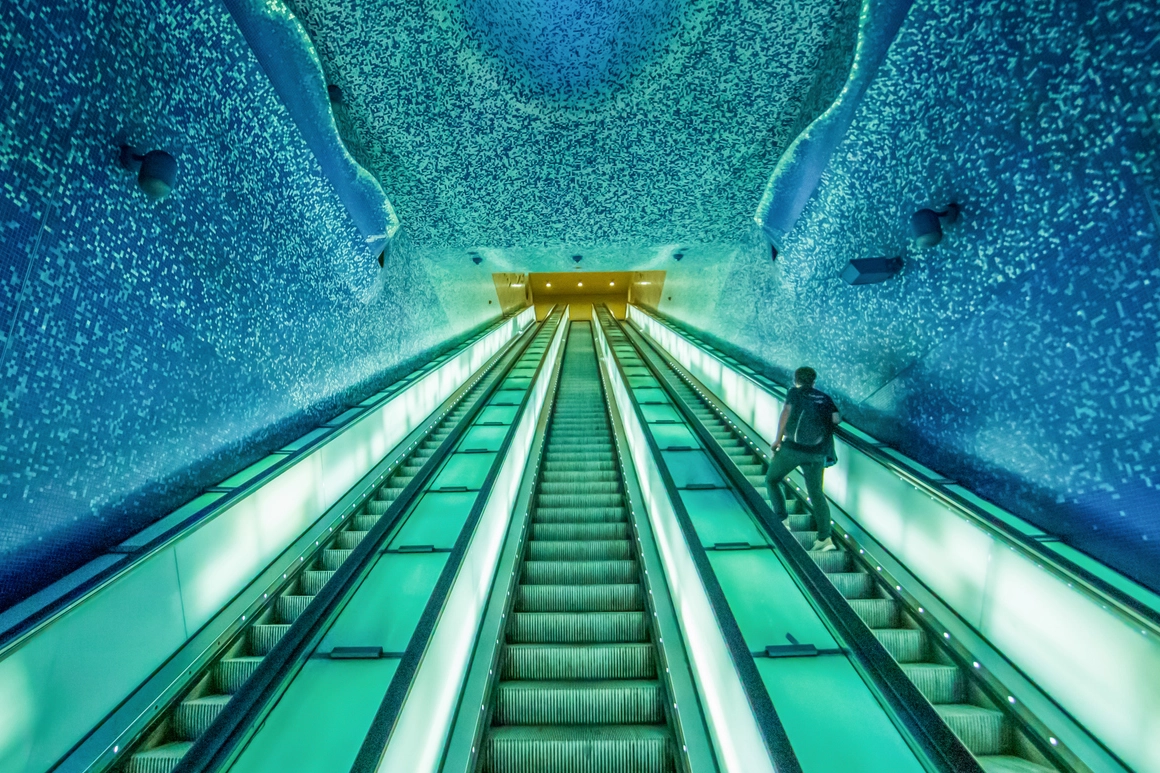
Toledo station, Naples
2 of 6
Like a painting come to life, Toledo Station turns the routine act of catching the metro into a pleasant and visually stunning experience. Fifty metres underground, this stop on Naples’ Line 1 houses the work of architect Tusquets Blanca, inaugurated in 2012.
Upon leaving the platform and ascending the escalators, the mosaic walls are dotted with white splashes and various shades of blue. The passage rises beneath a huge crater that spans the ceiling, illuminated inside with blue LED lights. The architecture, marked by soft curved lines, evokes the lapping of the waves and transforms the underground world into an immersive marine journey.
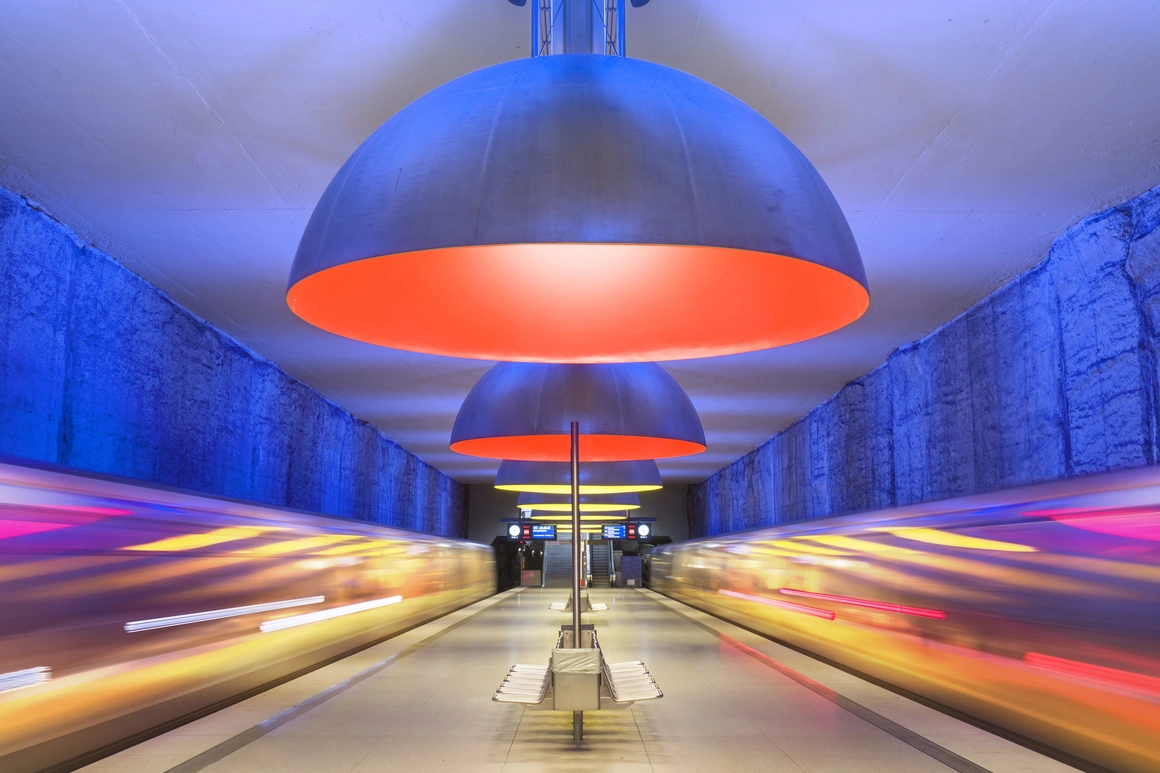
Westfriedhof station, Germany
3 of 6
Westfriedhof Station is located in the popular Moosach district of Munich and was inaugurated in 1998. At first glance, the concrete walls and the steel forming the furnishings and ceiling make it appear like a factory pavilion converted into a station. However, as you walk along the platform, domes suspended from the ceiling bring life and warmth to the industrial modernist architecture.
From the ceiling hang 11 enormous lamps emitting a red and yellow neon glow, while simultaneously casting shadows throughout the station. The artist Ingor Maurer was responsible for the lighting design, installed in 2001. In 2009, Maurer added a new system of blue lights that provides the characteristic blue ambience so distinctive of Westfriedhof Station.
Olaias Station, Lisbon
4 of 6
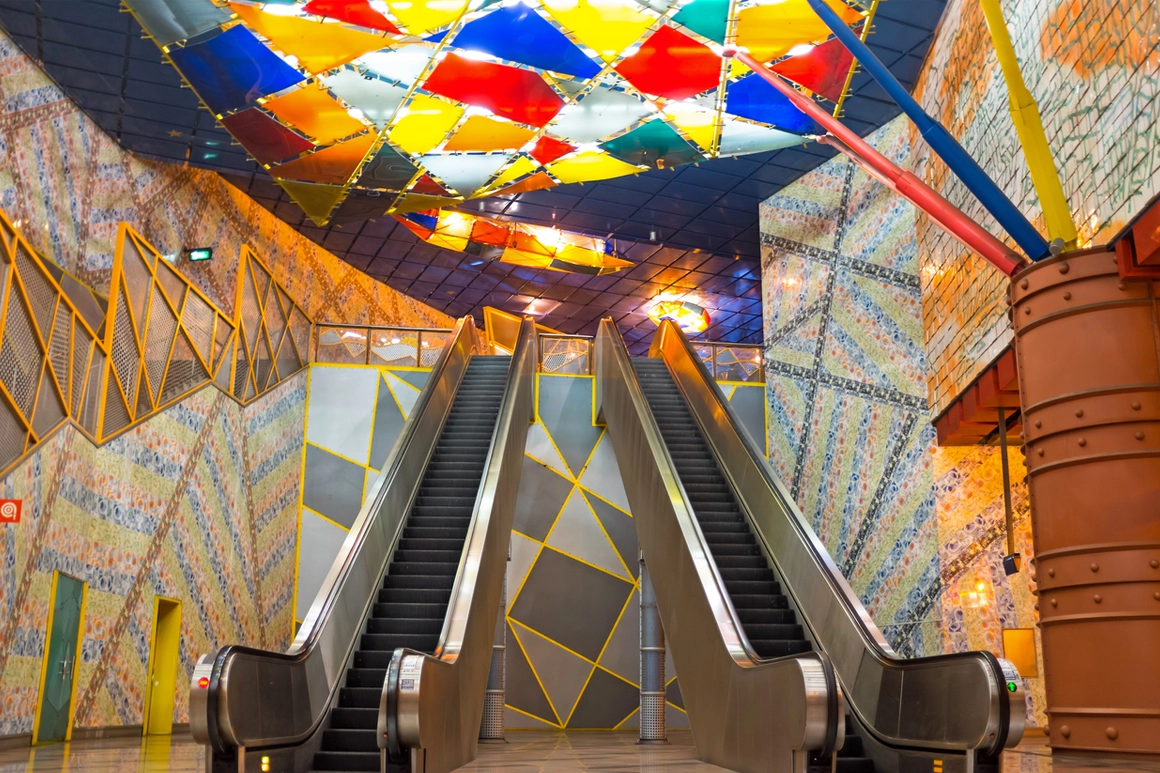
Beyond the beauty of Lisbon, with its viewpoints, winding streets, the characteristic tiles in its architecture, and the delicious pastéis de Belém, underground lies another true gem of the city to visit: Olaias Station. It is one of the 56 stations that connect the city, designed by the architect Tomás Taveira, who created a true masterpiece of contemporary art.
The station was inaugurated in 1998 alongside other stations as part of the construction of Lisbon’s red line, intended to connect the area of the Expo ’98. The design, based on ceramic cladding, vivid colours, and playful geometric shapes, brings life to the daily routine and transforms the station into a tourist attraction in the city.
Paco de Lucía station, Madrid
5 of 6
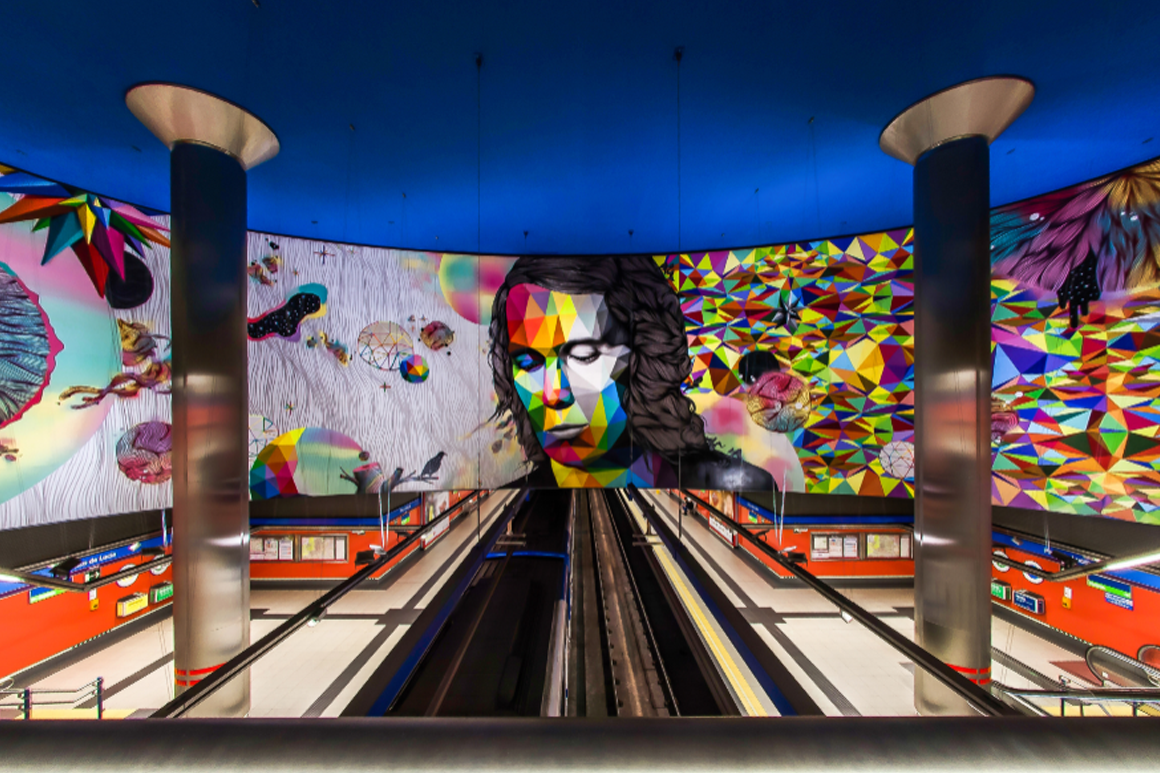
In 2014, on Line 9, a station was inaugurated in commemoration of the flamenco guitarist and composer Paco de Lucía. The stop features a mural of the composer’s face over 300 metres long, with a colourful design, and it was inaugurated under the name “Entre dos universos”, referencing his piece “Entre dos aguas”.
The project was carried out by urban artists Rosh333 and Okuda and serves as a tribute to the artist’s career, which forms part of the musical history of the Iberian Peninsula.
Arts et Métiers station, Paris
6 of 6
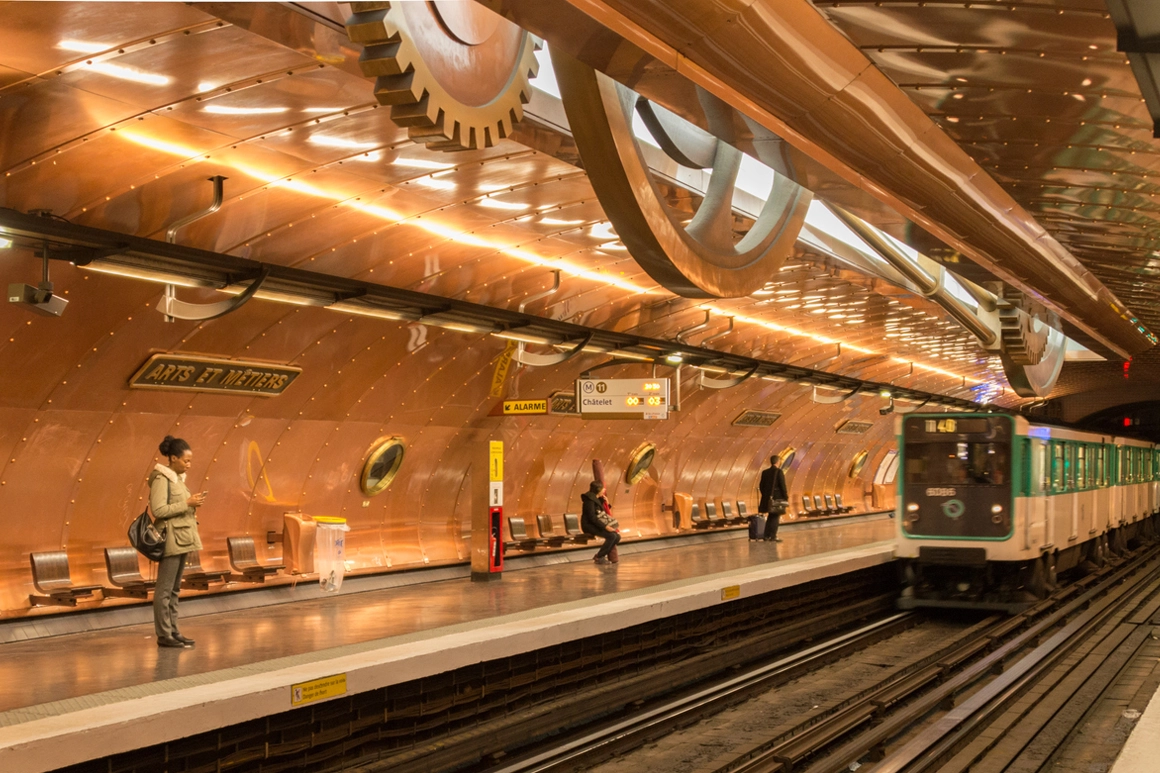
On Line 11 in Paris, you will find one of the most attractive and captivating stops in the capital. This is Arts et Métiers station, with a minimalist steampunk aesthetic clad in copper and rivets, reminiscent of a time capsule. But what does it actually represent?
Before 1994, the platform shared the same aesthetic as the rest of the Parisian stations, covered with the typical white tiles. However, from that year onwards, it was renovated to celebrate the bicentenary of the Conservatoire national des Arts et Métiers. The project, led by the Conservatory of Arts and Crafts, transformed the space inspired by the works of Jules Verne, particularly the Nautilus submarine, considered a symbol of technical progress. The architectural design is made up of meticulous details, such as gears and mechanisms integrated into the vault, turning the station into a gateway to a retrofuturistic world.