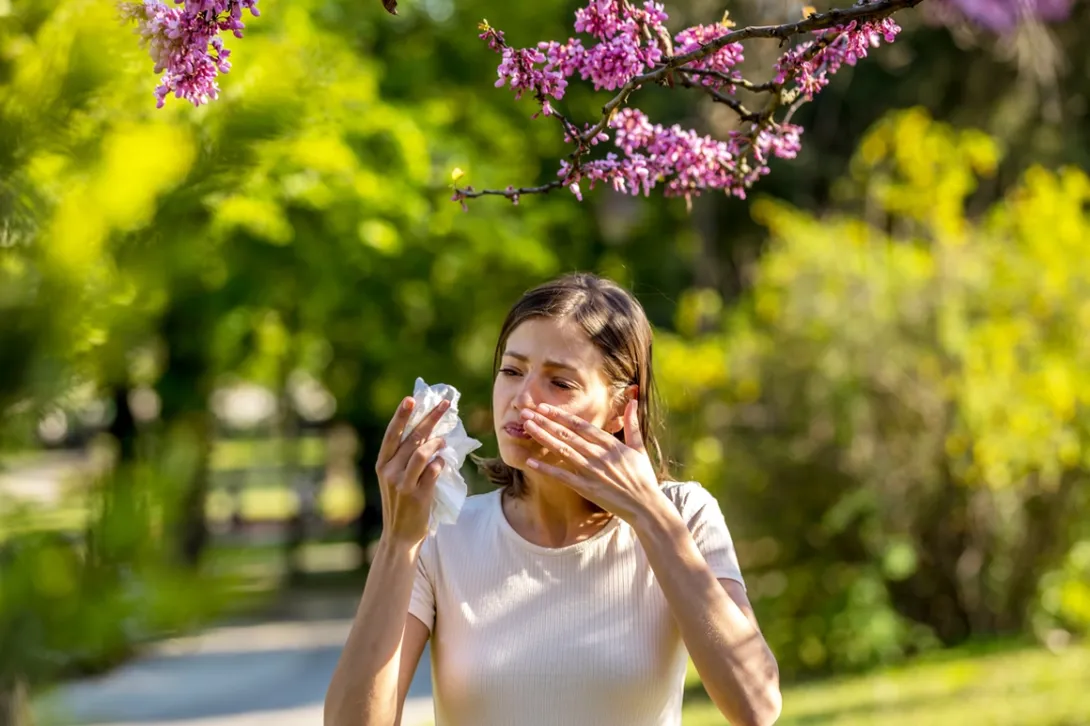
Why are we allergic to pollen?
Contamination, wind, and climate change have altered the duration of allergy seasons, and cases of pollinosis have increased.
Spring brings good weather, blooming flowers that add colour to the city, walks in parks and a cheerful mood. However, it can become a nightmare for those who are allergic to pollen. In Spain, it is estimated that there are 10 million people who suffer from some type of allergic reaction, and in Europe, it affects 20% of the population, according to data from the Official College of Nursing of Madrid.
Individuals with a greater predisposition to this hypersensitivity —also known as pollinosis— are children, although in recent years, the prevalence has increased across all ages. To understand why we are allergic to pollen, it is essential to know the causes and types of conditions that can arise as a result.
How the body reacts to pollinosis
Allergies are a reaction of our immune system as a defense against external substances that enter our body. Unlike other conditions, it does not only affect people with a family history; anyone can develop sensitivity if frequently exposed to an allergen, according to the Spanish Society of Clinical Immunology, Allergology and Paediatric Asthma (SEICAP).
Allergic episodes occur when the body perceives a substance as a threat and produces specific antibodies against it. These antibodies then attach to cells called mast cells, mainly found in the nose, eyes, and lungs. When the person comes into contact again with the allergens, the immune system releases histamine, a substance that causes inflammation, itching, and congestion as a defensive mechanism.
Allergies can arise from foods or medications, products absorbed through the skin, insect bites, or particles suspended in the air. Some of these, such as food allergens, can be avoided if known. However, those who suffer from recurring and sometimes unavoidable symptoms are usually allergic to pollen or airborne particles.
Why are we increasingly allergic to pollen?
Naturally, pollinosis should be more common in rural areas due to the abundance of pollinating plants. However, air pollution, as well as changes in lifestyle and the environment, is causing a rapid increase in allergy cases in cities.
Additionally, wind is another key factor that the study remarks on: before and after the pollen season, air masses are often light and travel short distances, which allows pollen to accumulate in areas close to its source. As a result, large cities become saturated with massive amounts of particles, which, combined with urban pollution, can cause allergic rhinitis or other conditions such as conjunctivitis.
Tips to reduce pollen allergy symptoms
To alleviate pollinosis symptoms, it is most important to identify the cause of the allergy so you know the most sensitive times of year and which geographical areas to avoid. Other tips to manage allergies include:
- Ventilate in the early morning and at night, as pollen concentration is lower.
- Install pollen filters in car and home air-conditioning units, and change them regularly.
- Avoid outdoor activities between 12:00 and 17:00 hours.
- Use pollen masks, if necessary.
- Avoid having pollinating plants indoors, as pollen spreads through the air. Opt for leafy plants such as pothos, monstera, or cactus.
- Wear sunglasses to prevent pollen from contacting the eyes.
If symptoms persist or interfere with daily life, it is important to consult a doctor who can recommend the most suitable treatment. The key to managing pollinosis is prevention.