Cairo is (finally) opening the Great Egyptian Museum
The GEM is destined to become one of the most important cultural centres on the planet, with five million visitors every year; an unbeatable excuse to plan a fascinating getaway to Egypt.
The political instability, the high cost of the building work that continuously became more complex and even COVID-19 have all delayed the opening by over a decade of what is destined to be one of the most important museums in the world, the Great Egyptian Museum.
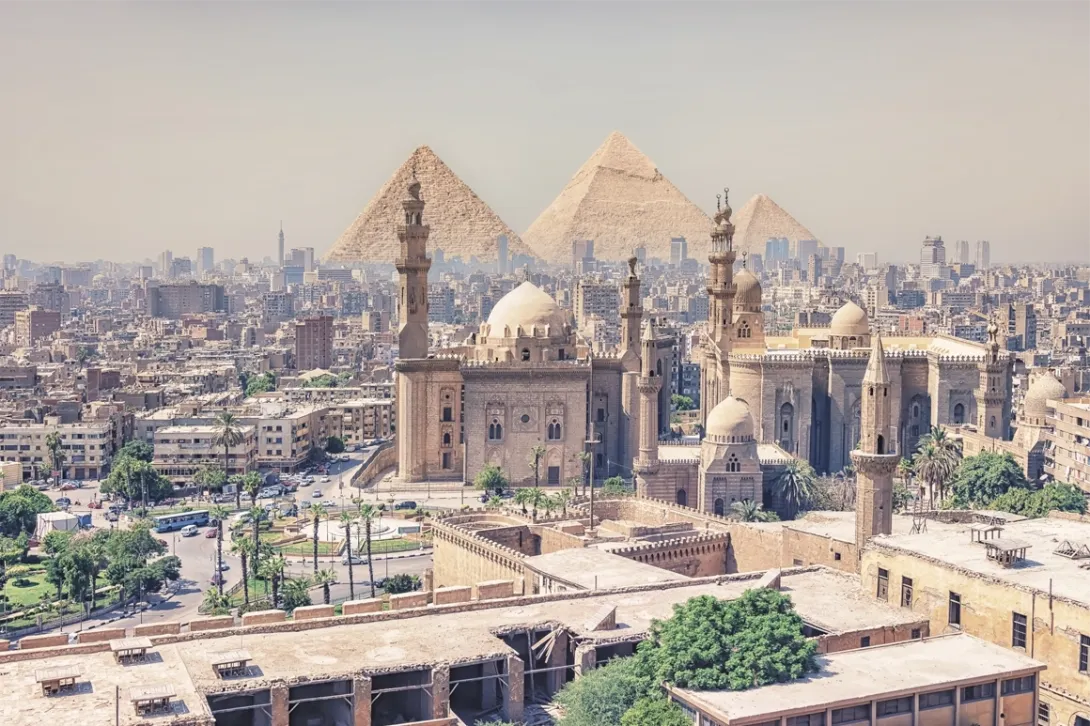
Erected next to the last of the seven wonders of the ancient world, the Great Pyramid of Giza, this monumental complex opened its doors, showing the largest Egyptian collection ever placed on display. The 100,000 objects that are exhibited, some up to 7,000 years old, include treasures from the tomb of the young king Tutankhamon that have never been shown to the public. Designed by the Irish company Heneghan Peng Architects, the building is a work of engineering that is integrated into the desert landscape, strategically located to offer spectacular views of the pyramids.
The boat that transported the pharaoh’s soul to the next life
Visitors have an impressive welcome: on the Great Atrium the vast 11-metre-high statue of Ramses II awaits them, which gives way to the Great Stairway, a path surrounded by mysterious statues that guide visitors towards the galleries. Although it would take a couple of days to visit the entire GEM in detail, there are some essential galleries. On the one hand, the long-awaited complete collection of King Tutankhamon, which is presented for the first time; on the other hand, the solar boat of Cheops, a fascinating funeral vessel with a length of over 43 metres and that is thousands of years old, which was believed to transport the pharaoh’s soul on his journey to the underworld.
It is predicted that over 5 million people will visit the museum every year, which will turn it into one of the most important museums in the world, if we take into account the 8.7 million who visited the Louvre last year, the 6.5 million who went to the British Museum and the 5.7 million who patronised the Metropolitan Museum of Art in New York. Visiting the GEM will also be the perfect excuse to plan a getaway for a few days to visit Cairo or even extend your stay in order to discover other essential attractions in Egypt.
A few metres from the museum, travellers will find one of the Egyptian capital city’s essential attractions, the pyramids of Guiza. The Pyramids of Cheops, Kefren and Mykerinos and the mythical Sphynx and several temples may be visited and added to the experience, if you wish, you can take a camel ride through the arid sands surrounding the historical monuments. And to enjoy some beautiful views of the enormous city, you must go to the Saladin Citadel, which covers a complex of monuments integrated into the interior of a medieval fortress that rises above the hills of Moqattam.
Another corner that is worth a visit is the Coptic District, a peaceful oasis, surrounded by the ancient walls of the Roman fortress of Babilonia, a highly relaxing place to leave behind the hustle and bustle of the metropolis for a few hours. The Christian heart of the city beats here, where travellers can be amazed with the impressive Hanging Church (El-Muallaqa), which appears to float over an ancient Roman gateway. Exploring the narrow alleyways, travellers will discover some historical monuments such as the Sacred Family Cave Church, in the Sanits Sergius and Bacchus Church or the Synagogue Ben Ezra.
Activities ranging from sailing down the Nile to exploring the reefs of the Red Sea
Beyond Cairo, no trip to Egypt is complete without the timeless experience of sailing down the River Nile. Considered to be the lifeline that gave rise to the civilisation of the pharaohs, a cruise between Luxor and Aswan is not only a means of transport, but rather a calm immersion into the historic landscape. From the deck, you will be able to observe the rural life that has hardly changed in millennia: green fields, date palm trees and picturesque villages, while sliding in between the country’s most important temples.
Another essential stop is Luxor. The city, which was once the majestic Thebes, is essentially the largest open-air museum in the world. Here, the impressive temple of Luxor and the gigantic temple of Karnak converge, with huge avenues of sphynxes. Crossing the Nile, on the western bank, is the Valley of the Kings and the Valley of the Queens, with the colourful and well-preserved tombs of the pharaohs.
For sea enthusiasts and adventure lovers, Egypt also offers a surprising contrast on its eastern coast: the crystal-clear waters of the Red Sea. Destinations such as Sharm el-Sheij and Hurghada are world famous for offering some of the best diving and snorkelling experiences on the planet. It is a real natural aquarium that houses vibrant coral reefs that are untouched and where you can swim alongside tropical fish of a thousand colours, turtles and even explore fascinating shipwrecks. It is without any doubt, the perfect finishing touch for a journey to this millenary land.