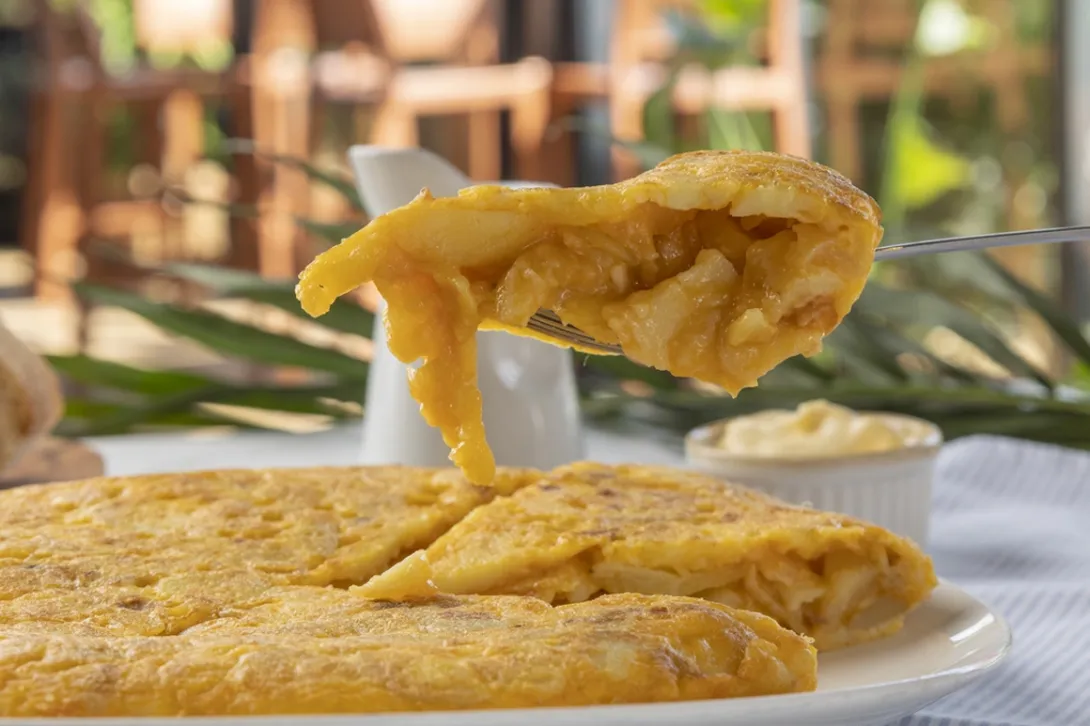
Best tricks for a perfect Spanish-style potato omelette
The Spanish-style potato omelette has sparked an historical debate: with or without onion? Setting this question aside, today we’re sharing the ultimate tips to make it perfect.
The Spanish-style potato omelette is one of the most typical Spanish recipes. It requires just a few ingredients but mastering it can be very challenging. Here we list some tips shared by expert chefs to achieve the perfect potato omelette.
High-quality ingredients
The Spanish-style potato omelette is made with very few ingredients, but their quality can make a big difference in the result.
The potatoes must be fresh and firm. The most highly recommended varieties for frying are agria and kennebec. On the other hand, it is advisable to avoid potatoes which have sprouted, have a wrinkled skin and/or feel soft when touched.
On the other hand, eggs should also be very fresh and high-quality. Therefore, it is important to check the best-before date: the further away you are from that date, the fresher the egg will be. Furthermore, organic eggs (code 0) or free-range eggs (code 1) tend to taste better, as a result of the hens being raised in better conditions and fed a better diet.
Moreover, potato omelettes can be altered to accommodate different tastes: with or without onion, with a range of degrees of doneness, etc. However, the basic preparation steps are always the same.
Traditional Spanish potato omelette recipe
Ingredients:
- 600 g kennebec or agria potatoes
- 7 fresh eggs
- Extra virgin olive oil
Salt
Some mistakes to avoid and why
Even following a good recipe, there are some small oversights that can ruin the final result of a potato omelette. Therefore, it is very useful to be aware of the most common mistakes and understand why they happen.
- Frying the potatoes over high heat from the start will brown them on the outside while the inside is still raw.
- Not using enough oil to fry the potatoes prevents them from cooking evenly.
- Not straining the potatoes thoroughly before adding them to the beaten egg will add too much fat to the omelette and prevent the eggs and potatoes from sticking to each other properly.
- Turning the omelette over too early (it can fall apart) or too late (it will be very dry). You will have to learn to tell when is just the right moment.
- Using a pan that is too big will spread out the mixture too far, making it difficult to flip the omelette, and the result will be too thin. A smaller-diameter pan is always preferable, producing a thicker, juicier and more attractively shaped omelette.
The nutritional value of a potato omelette and recommended side dishes
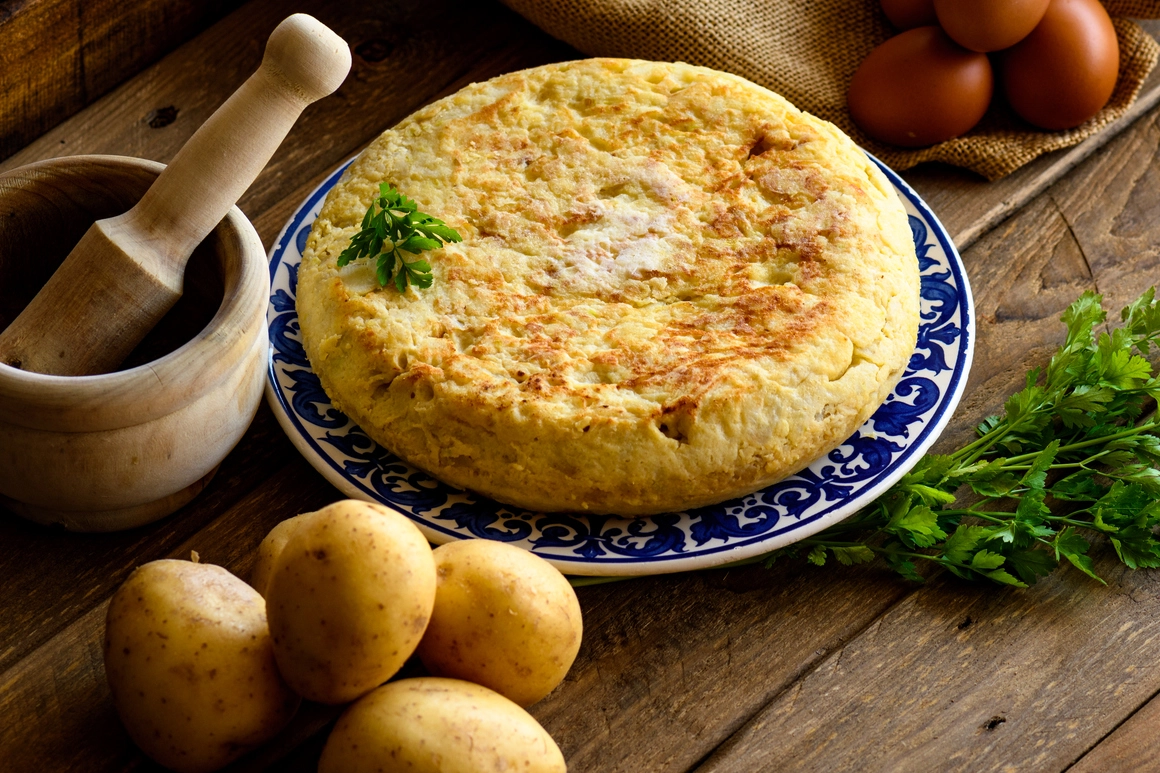
Spanish-style potato omelette
1 of 1
A potato omelette is a calory-rich and filling dish that combines carbohydrates from the potatoes, high-biological-value protein from the eggs and healthy fat from the olive oil. To complement its nutritional profile, it is advisable to serve it with a portion of vegetables: a fresh salad, a vegetable soup, a glass of gazpacho, grilled asparagus or a vegetable stew. This will add fibre, vitamins and minerals, achieving a complete and well-balanced meal.