
Earwax blockages: when should you visit a doctor?
If earwax blockages cause discomfort, a specialist should assess whether or not they need to be removed.
Having earwax in the ear is a natural and physiological condition that, beyond seeming unpleasant or bothersome, has an essential role in protecting our ears.
This substance accumulates in the external auditory canal, which extends from the outer ear to the eardrum. There, the sebaceous and ceruminous glands produce a mixture of oily and waxy secretions that combine with dead cells and other substances to form a natural, waxy barrier that protects the ear canal.
Generally, it is not necessary to remove earwax manually, as the external auditory canal is designed to be self-cleaning. However, when there is too much build-up, it can lead to wax blockages in the ears and cause discomfort or hearing loss. In severe cases, it can even lead to infections or otitis. Therefore, knowing how to clean your ears properly and when to see a doctor is essential for maintaining good ear health.
Why do earwax blockages form?
Earwax has two main functions in the ear:
- It keeps the skin of the ear canal lubricated, preventing dryness and irritation.
- It traps dust particles, dirt and microorganisms, as well as small objects that could damage the ear.
When this substance becomes thick, it can lead to earwax blockages. However, despite popular belief, these blockages are not caused by poor hygiene but rather because the earwax is not being removed properly or due to an excess of secretion caused by external factors.
In fact, environmental conditions are one of the main causes of ear blockages. Areas with high levels of dust, heat or humidity can increase wax production or cause it to harden more easily.
Age also influences the texture of earwax: in older people, the ceruminous gland may atrophy, resulting in drier and more compact earwax. Furthermore, those who are prone to wax blockages should take particular care if they have piercings, as these encourage the accumulation of dust, sebum and dead skin cells. In this case, good hygiene must be maintained to prevent potential infections.
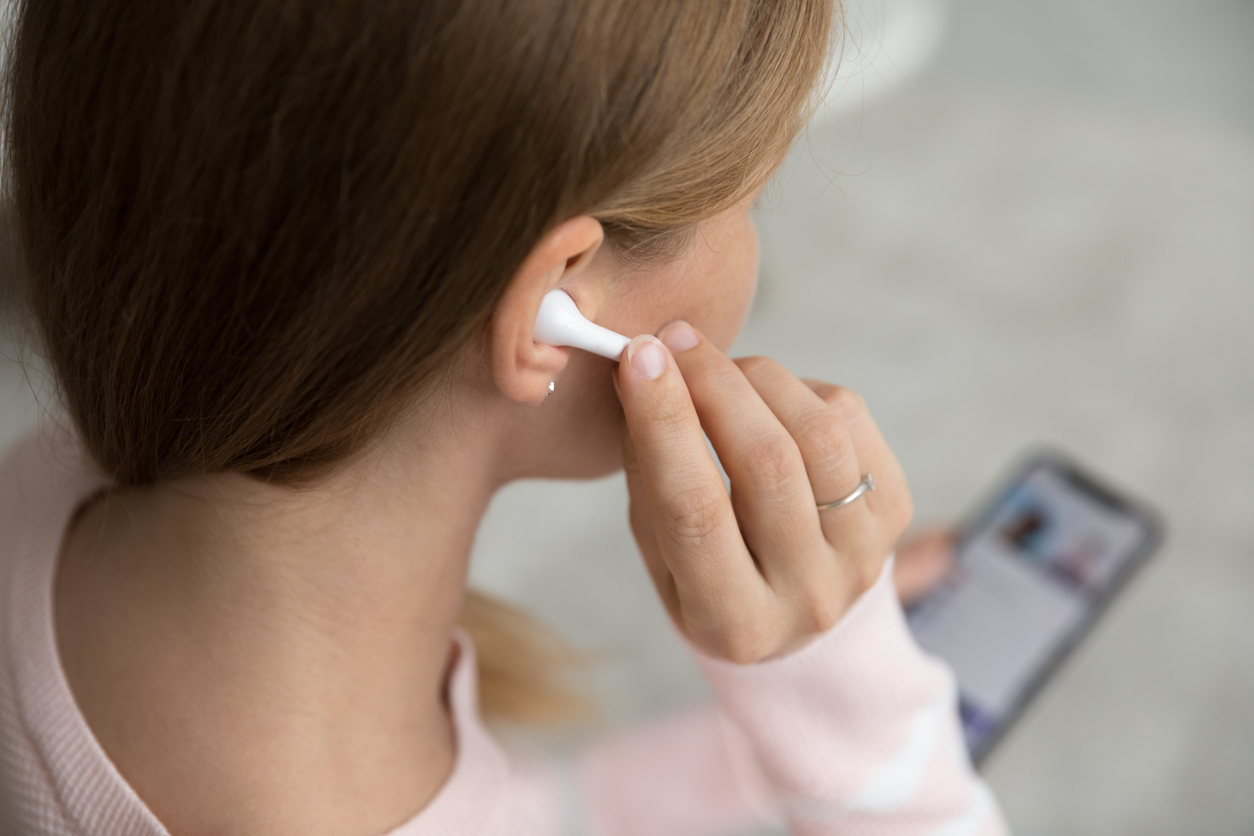
Furthermore, the use of headphones has introduced a newdanger to the health of our ear canals. The reason is that our ears are not designed to be exposed to high volumes for prolonged periods of time. This strain, as well as damaging the eardrum and reducing hearing quality in the long term, promotes the build-up of earwax and prevents it from moving naturally outwards, which leads to the formation of wax blockages in the ears.
What you shouldn’t use to clean your ears
It is important to remember that the ear canals clean themselves naturally by pushing wax outwards through everyday movements, such as chewing or talking. Occasionally, either spontaneously or due to a predisposition, earwax blockages can occur and, as a reflex, we tend to use cotton buds to remove them.
However, healthcare professionals advise against using them, as although we may think we are removing the wax, we are actually pushing it deeper into areas where it cannot be cleared naturally. As a result, this can lead to infections, internal injuries, ear infections or other hearing problems.
Likewise, the Food and Drug Administration (FDA) warns that using ear candles is unsafe, as there is a risk of burns, perforation of the eardrums or blockage of the ear canal, particularly in children.
When should you see a doctor?
Proper ear hygiene is usually enough to maintain good hearing and prevent infections. Although earwax blockages do not usually cause serious symptoms, in some cases they may be accompanied by pain, hearing loss, itching, ringing in the ears or discharge from the ear.
Under no circumstances should you insert objects into the ear canal to try to remove earwax, as this could make the discomfort worse and even perforate the eardrum. If you experience discomfort, you should consult an otolaryngologist, who will determine the cause and assess whether or not it is necessary to remove the earwax.
In short, earwax acts as a natural barrier that protects the health of our ear canal and, under normal conditions, is eliminated naturally. When earwax blockages occur, we should not attempt to remove them with any object but rather choose less invasive options. Furthermore, if this build-up causes discomfort or unusual symptoms, it is important to see an specialist so that it can be safely removed.