Fan or air conditioner: which is more sustainable?
As heatwaves increase, the dilemma of choosing a fan or air conditioner becomes frequent and which is the more efficient and sustainable.
AEMET has already announced three heatwaves during July 2026, with temperatures reaching as high as 44°C in some autonomous communities. In Catalonia, specifically, the hottest start to summer in the last 75 years has been recorded, with temperatures 3.8% above the long-term average.
As summers become increasingly warmer, many people choose to install one of the most common cooling systems for the home: a fan or air conditioner. However, both appliances present significant differences in terms of cost, operation, comfort and environmental impact.
Fan or air conditioner: how do they work?
One of the main differences between these systems is installation. Both fans and air conditioning units are available in models that require professional installation and others that simply plug into a power socket.
In most cases, purchasing a fan is quicker, cheaper and easier than installing an air conditioning unit, although it does not provide the same level of cooling or comfort.
Air conditioners work by transferring heat from inside the home to the outside. To do this, they use a refrigerant gas that absorbs heat from the room, transports it and releases it outside the building, thereby lowering the room temperature.
Fans, on the other hand, do not cool the air but simply circulate it. For this reason, when temperatures exceed 30°C, the cooling sensation decreases considerably. In addition, their effect is mainly felt at close range, making them more effective in smaller spaces.
Energy consumption and environmental impact
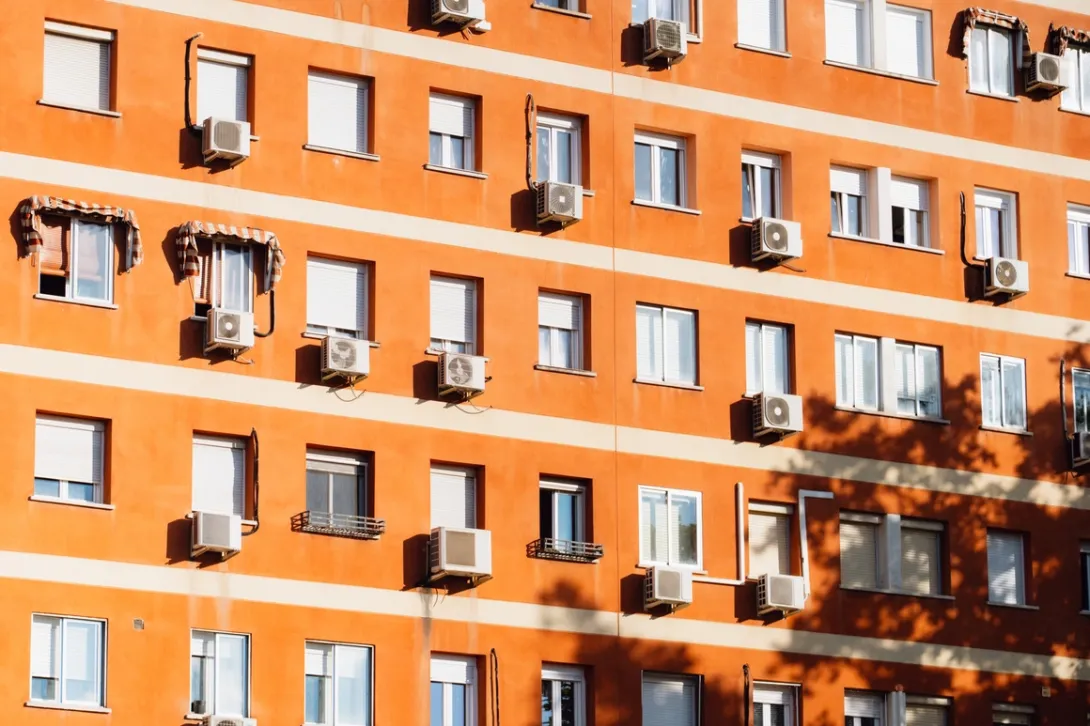
The widespread use of air conditioner units significantly increases electricity demand, especially during periods of extreme heat. But when choosing between a fan or air conditioner, energy consumption affects not only energy bills but also the environmental footprint.
According to Ministry data compiled in 2010, air conditioning accounts for around 1% of household energy consumption in Spain. In addition, a study published in El Ecologista indicates that intensive use of air conditioning systems can raise city temperatures by between 1.5 and 2°C.
This occurs because these systems expel heat outdoors, contributing to higher urban temperatures and reinforcing the so-called urban heat island effect and increased CO₂ emissions. This phenomenon, particularly visible in large cities, causes urbanised areas to experience significantly higher temperatures than nearby rural or suburban areas.
Ceiling Fans: the most efficient option
In recent years, ceiling fans have become a popular middle-ground solution when choosing between a fan or air conditioner. Their operation is similar to that of any other fan, but their larger size allows them to generate a broader airflow and improve air circulation throughout the room.
In fact, according to WWF, choosing these devices can prevent the emission of up to 300 kilograms of CO₂ during the summer months compared with continuous air conditioner use. In addition, they consume much less electricity and help reduce both energy costs and the household’s environmental impact.
In conclusion
Spain’s average temperature has increased by 1.75°C since 1961, and 2025 was the third warmest year on record, tied with 2024. According to the Ministry, this increase is linked to climate change caused by human activity.
Therefore, beyond immediate comfort, it is important to adopt habits that reduce our environmental impact. Simple actions such as prioritising the use of fans, making the most of natural ventilation, or reserving air conditioning for periods of extreme heat can help reduce energy consumption and contribute to a more sustainable future.
Use air conditioning responsibly
Advices
1 of 1
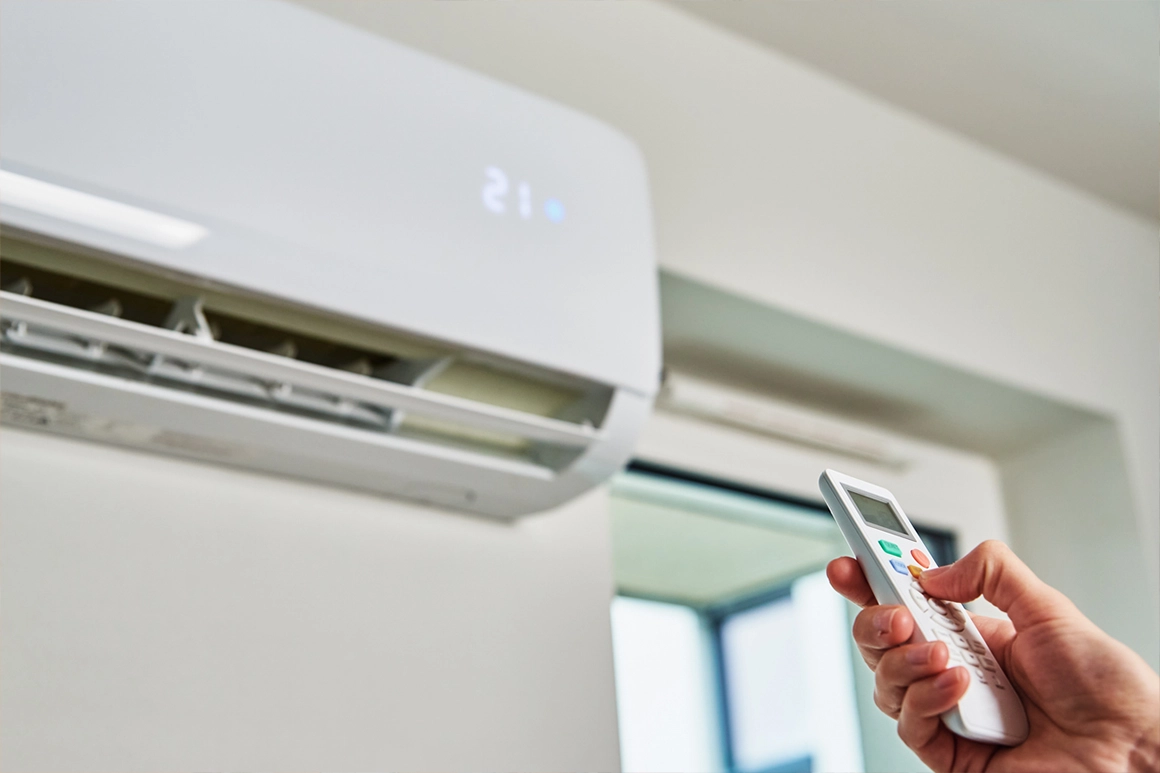
On days when temperatures approach 40°C, a fan may not be enough, and air conditioning can become almost a necessity. However, to use it more efficiently and minimise its environmental impact, it is worth following a few recommendations:
- Combine it with a fan. The WHO recommends setting the air conditioning to around 27°C and using it alongside a fan where possible. This helps reduce energy consumption, lower electricity costs and limit the urban heat island effect.
- Choose units with an A++ or A+++ energy efficiency rating.
- Avoid leaving it running throughout the night.
- Maintain a stable temperature between 24°C and 26°C, avoiding sudden fluctuations.
- Use it only during periods of extreme heat, relying on more sustainable cooling solutions at other times to keep indoor spaces comfortable.