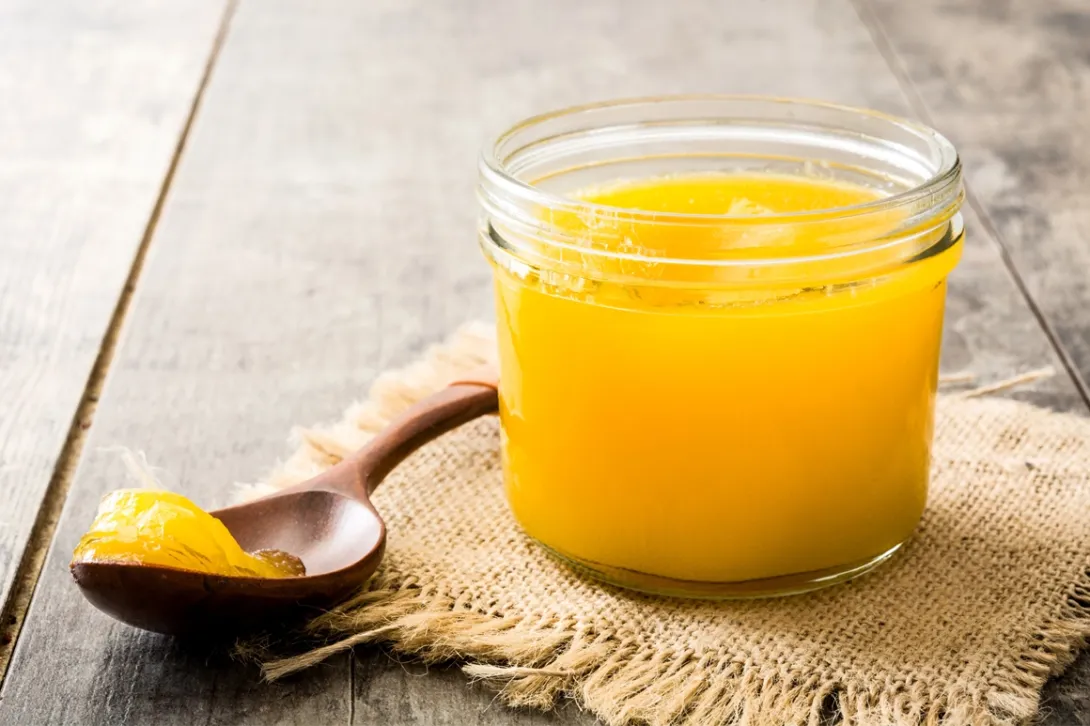
Learn how to make ghee, the most talked-about 'liquid gold'
Step-by-step guide to making ghee, a butter-derived fat that’s perfect for cooking at high temperatures.
In 2025, a versatile butter derivative became very popular, with a higher smoke point than the oil and other fats we use everyday. We’re talking about ghee, better known as clarified butter (although they aren’t exactly the same – we’ll explain why later), which has gone viral as the ‘liquid gold’ of the kitchen. It is a more concentrated version of traditional butter and offers greater digestive benefits. Keep reading if you want to learn how to make it at home!
For years, animal fats – such as butter – have been the subject of debate in the world of nutrition. Their high calorie content poses a threat to physical health and raises ‘bad’ cholesterol levels, which is why moderate consumption is recommended.
However, although they are still perceived as forbidden foods by many people, the World Health Organisation recommends that 10% of daily calorie intake should come from fats, provided this is part of a healthy and balanced diet.
Its origins lie in India
Ghee has its roots in Ayurveda medicine, the world’s oldest system of medicine, which originated in India and is still practised today. This ingredient is highly valued for its digestive benefits. In this context, it is used as a food or as an ointment to nourish the skin, as it is believed to help balance the doshas or the three vital energies, which are philosophy, the mind and the emotions.
Beyond its spiritual use, ghee is highly prized in India because, unlike butter, it is highly resistant to high temperatures and can be stored perfectly in the continent’s hot climate.
Nutritional composition and culinary uses
Ghee is made by cooking butter, which means that, although it is derived from butter, its composition is very different. Ghee consists of 99% fat, whereas butter is made up of approximately 85%. The reason for this is that, to make ghee, the water, casein and lactose are removed from the butter, which results in a more concentrated fat. Furthermore, as it contains no milk solids, it is a perfect and more easily digestible option for people who are lactose intolerant.
Nutritionally speaking, it contains vitamins A, D, E and K. It also contains essential fatty acids and butyric acid, which helps reduce inflammation and improve the intestinal barrier. Some studies are even linking it to improved cardiovascular health and a reduction in LDL (or ‘bad’) cholesterol in certain contexts. However, it is important to remember that ghee is still a food high in saturated fat and very high in calories, so it should be consumed in moderation to protect heart health.
Ghee and clarified butter are different products
In the West, we tend to use the terms ‘ghee’ and ‘clarified butter’ to refer to the same product, but although both are pure, lactose-free fats, they are not the same thing.
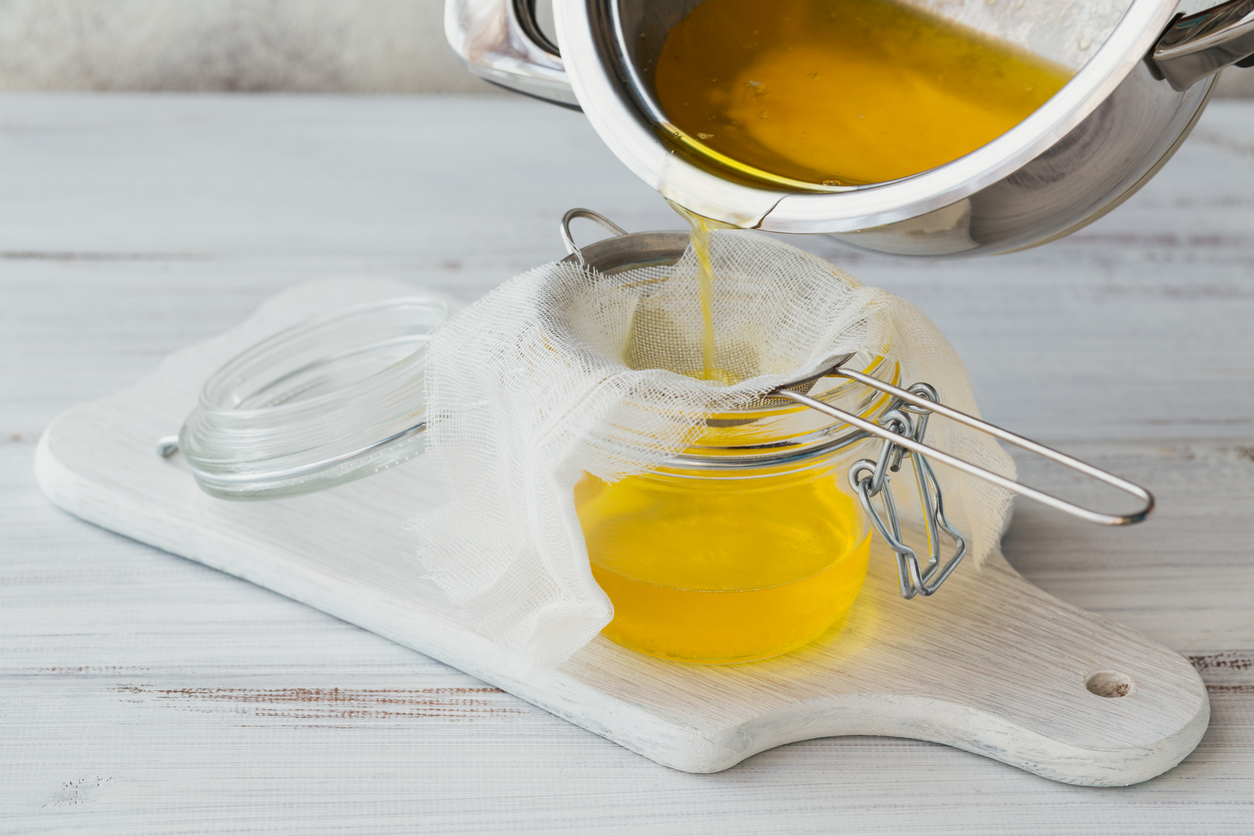
The main difference lies in the cooking time required to produce them. Clarified butter is removed from the heat earlier to obtain a more neutral texture and a pale yellow colour. Ghee, on the other hand, is cooked for longer to caramelise the milk solids and produce a more golden-coloured fat with its characteristic nutty flavour. In the recipe below, you’ll find the steps for making ghee and clarified butter.
How do you make ghee at home?
Ingredients:
- 1 kg of unsalted butter.
Preparation
Homemade ghee: a tasty and economical version
Although ghee is readily available in supermarkets, its price makes it a luxury item. In fact, it costs around €34 per kilo, whereas the butter we usually buy costs around €9 per kilo.
This is due to its production process, the amount of raw material required to make it, and its high popularity. That’s why making it at home is a more economical alternative, and what’s more, it’s so easy to make that you’ll become addicted to it!